
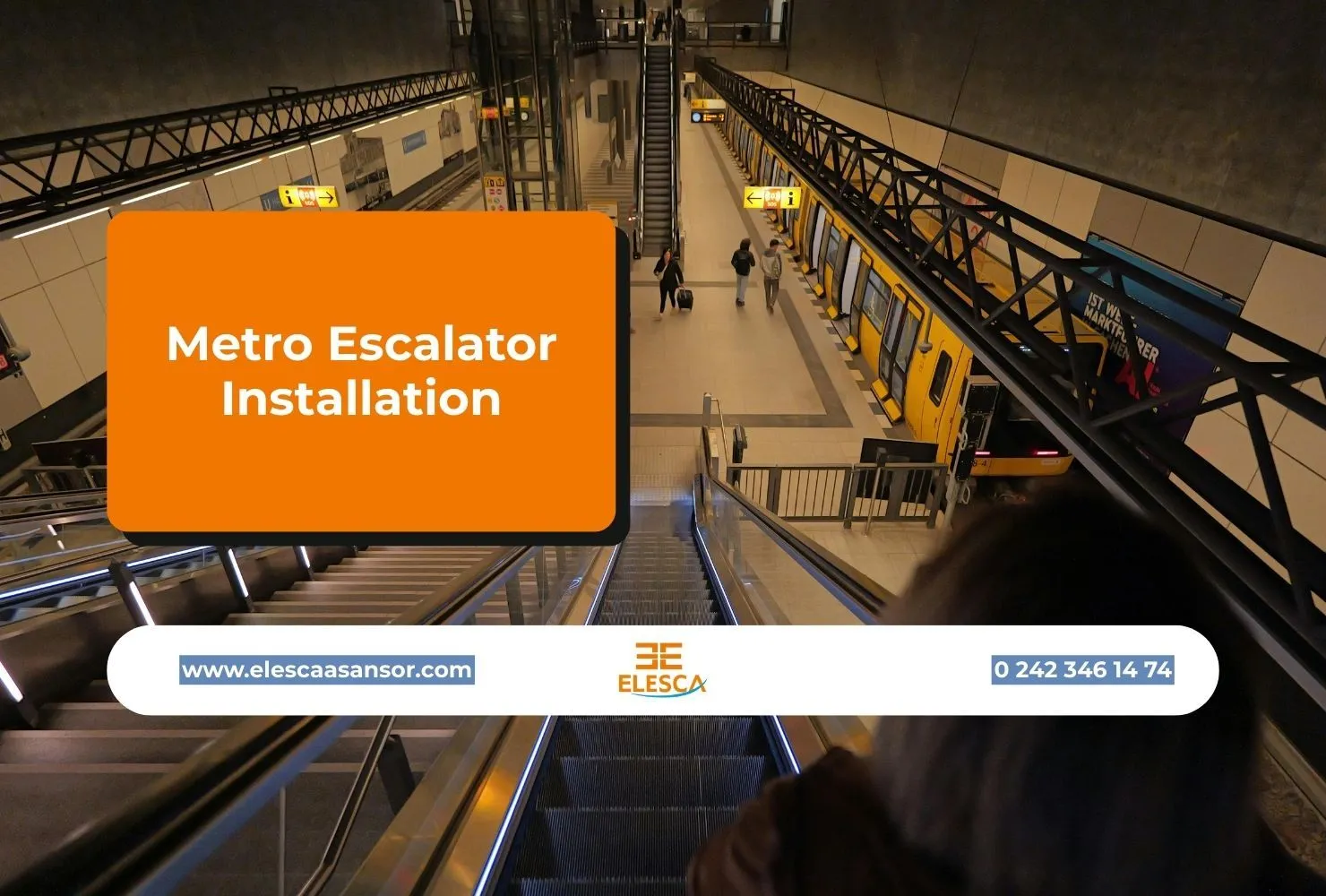
Metro Escalator Installation
Metro Escalator Installation Engineering Safe and High-Capacity Urban Mobility
Urban transportation systems rely heavily on safe, durable, and high-performance vertical transportation solutions. Metro Escalator Installation plays a critical role in ensuring fast passenger circulation, accessibility, and operational efficiency in underground and elevated rail networks.
At Elesca Elevator & Escalator Systems, based in Antalya, we supply premium escalator spare parts for metro projects in both domestic and international markets. Our advanced component range supports reliable, energy-efficient, and long-lasting metro escalator systems designed to handle intense daily passenger traffic.
Company Name: Elesca Elevator & Escalator Systems
Phone: +90 242 346 14 74
What Is Metro Escalator Installation?
Metro Escalator Installation refers to the complete engineering, assembly, and commissioning process of escalator systems designed specifically for metro and subway environments. Unlike commercial escalators, metro systems require:
- Heavy-duty load capacity
- Extended operational hours (24/7 service)
- Enhanced safety mechanisms
- Fire-resistant and vandal-resistant components
- Compliance with international safety standards
Metro stations often serve thousands of passengers per hour. Therefore, escalator installation must prioritize durability, safety, and uninterrupted performance.
Why Metro Escalator Installation Is Critical in Public Transport
Metro environments present unique engineering challenges:
- Deep vertical shafts
- Continuous heavy passenger flow
- Dust, humidity, and vibration exposure
- Emergency evacuation requirements
A properly executed Metro Escalator Installation ensures:
- Smooth passenger flow during peak hours
- Reduced congestion
- Enhanced safety and accessibility
- Lower long-term maintenance costs
- Reliable operation during emergencies
Without robust installation planning and high-quality components, escalators in metro stations can suffer premature wear and frequent breakdowns.
Core Components Used in Metro Escalator Installation
The reliability of a metro escalator depends on the quality of its mechanical and electrical parts. At Elesca Elevator & Escalator Systems, we supply durable spare parts engineered for high-performance systems.
- Escalator Handrail
The Escalator Handrail ensures passenger stability and comfort. In metro applications, handrails must:
- Resist continuous friction
- Withstand temperature changes
- Provide fire-resistant properties
- Offer anti-slip grip performance
Premium rubber compounds and reinforced internal layers increase longevity and safety.
- Pulley Systems
Heavy-duty pulley systems guide the handrail and support smooth mechanical motion. In Metro Escalator Installation, pulleys must be:
- Precisely aligned
- Manufactured with wear-resistant materials
- Balanced for vibration control
High-quality pulleys reduce mechanical stress and extend escalator lifespan.
- Step Roller
The Step Roller ensures smooth and stable step movement along the guide rails. In metro environments where escalators operate continuously:
- Rollers must handle high loads
- Bearings must resist dust and debris
- Materials must minimize noise
Durable Step Roller systems are essential for preventing vibration and premature mechanical wear.
- Step Chain
The Step Chain is the backbone of escalator motion. During Metro Escalator Installation, selecting industrial-grade Step Chain systems is crucial because they:
- Carry full passenger load weight
- Operate under constant tension
- Must resist corrosion and elongation
High-strength alloy steel chains ensure safety and long-term reliability.
- Comb Plate
The Comb Plate connects the moving steps with the landing platform. It plays a vital safety role by:
- Preventing objects from getting trapped
- Ensuring smooth passenger entry and exit
- Providing anti-slip surfaces
In metro installations, reinforced Comb Plate designs enhance durability and passenger protection.
- Escalator Control Panel
The Escalator Control Panel manages system operation, safety monitoring, and emergency response. Advanced panels used in Metro Escalator Installation offer:
- Real-time diagnostics
- Emergency stop integration
- Speed regulation
- Fault detection systems
- Remote monitoring capability
Modern control systems increase efficiency and reduce downtime.
- Step
Escalator Steps must withstand heavy passenger loads and constant motion. Metro-grade steps are:
- Manufactured from die-cast aluminum or stainless steel
- Designed with anti-slip grooves
- Reinforced for structural strength
High-quality Step production ensures smooth ride comfort and passenger safety.
- C Return Chain
The C Return Chain supports the return path of escalator steps underneath the system. In metro projects, it must:
- Maintain proper tension
- Resist corrosion
- Minimize vibration
Durable C Return Chain components extend overall escalator performance.
- Handrail Inlet Cover
The Handrail Inlet Cover prevents foreign objects from entering the handrail return system. In high-traffic metro stations, this component enhances safety and protects internal mechanisms.
- Step Skirting
Step Skirting prevents clothing and objects from getting trapped between moving steps and the side panels. In Metro Escalator Installation, proper alignment and anti-friction materials are critical for:
- Passenger safety
- Reduced wear
- Compliance with safety regulations
Key Phases of Metro Escalator Installation
Successful Metro Escalator Installation follows structured engineering phases.
- Site Assessment and Planning
Engineers analyze:
- Vertical rise height
- Passenger capacity
- Station layout
- Structural load requirements
- Emergency evacuation routes
Accurate planning prevents costly modifications later.
- Structural Preparation
Before installation:
- Escalator pits are prepared
- Support beams are reinforced
- Power supply systems are configured
Metro stations often require custom structural adjustments due to space limitations.
- Mechanical Assembly
During this stage:
- Truss placement occurs
- Step Chain and C Return Chain systems are installed
- Step Roller mechanisms are aligned
- Escalator Handrail systems are fitted
Precision alignment is essential for smooth long-term performance.
- Electrical Integration
The Escalator Control Panel is connected to:
- Power distribution systems
- Safety sensors
- Emergency stop circuits
- Fire alarm systems
Metro escalators must integrate seamlessly with station-wide safety infrastructure.
- Safety Testing and Commissioning
Before opening to the public, Metro Escalator Installation includes:
- Load testing
- Brake performance testing
- Emergency stop validation
- Speed calibration
- Noise and vibration analysis
Only after successful inspection is the system approved for operation.
Safety Standards in Metro Escalator Installation
Metro escalators must comply with strict international safety standards. Key requirements include:
- Fire-resistant materials
- Anti-slip step surfaces
- Skirt deflectors
- Comb Plate safety sensors
- Redundant braking systems
Using certified components reduces liability risks and enhances passenger trust.
Energy Efficiency in Modern Metro Escalator Installation
Energy-saving technologies are increasingly integrated into metro systems. Innovations include:
- Variable frequency drives
- Automatic start-stop sensors
- LED lighting integration
- Regenerative drive systems
Efficient Escalator Control Panel programming reduces energy consumption during off-peak hours while maintaining readiness.
Maintenance Considerations After Metro Escalator Installation
Post-installation support is critical. Preventive maintenance ensures:
- Step Chain tension stability
- Proper Step Roller lubrication
- Comb Plate inspection
- Handrail Inlet Cover cleaning
- Escalator Handrail alignment
Routine inspections prevent sudden system failures and extend component lifespan.
Why Choose Elesca Elevator & Escalator Systems?
Elesca Elevator & Escalator Systems, based in Antalya, supplies high-quality spare parts for Metro Escalator Installation projects worldwide.
Our Advantages
- International supply capability
- Durable, high-performance components
- Compatibility with leading escalator brands
- Expert technical support
- Competitive pricing
We collaborate with industry-leading solution partners to deliver premium-quality Escalator Handrail, Step Chain, Comb Plate, Escalator Control Panel, Step Roller, and other essential components.
Applications of Metro Escalator Installation
Metro escalator systems are used in:
- Underground subway stations
- Elevated metro platforms
- Interchange hubs
- Airport-metro connections
- High-capacity transit terminals
Each environment requires customized engineering and component selection.
Common Challenges in Metro Escalator Installation
- Limited underground space
- Heavy structural load requirements
- Continuous passenger flow
- Environmental factors such as dust and humidity
- Strict compliance inspections
Using high-quality spare parts minimizes downtime and operational risks.
Future Trends in Metro Escalator Installation
The future of Metro Escalator Installation includes:
- Smart monitoring systems
- AI-based predictive maintenance
- IoT-enabled Escalator Control Panel solutions
- Noise-reduction engineering
- Sustainable material usage
Advanced spare parts and digital integration improve operational efficiency and passenger safety.
Frequently Asked Questions About Metro Escalator Installation
How long does Metro Escalator Installation take?
Installation duration depends on station depth and project scale but typically ranges from several weeks to a few months.
What makes metro escalators different from commercial escalators?
Metro systems are designed for higher load capacity, longer operational hours, and stricter safety standards.
How often should maintenance be performed?
Routine inspections should occur monthly, with detailed mechanical checks quarterly.
Which parts wear out most frequently?
Step Roller systems, Step Chain components, Comb Plate sections, and Escalator Handrail elements typically experience the highest wear due to constant usage.
Conclusion
Metro Escalator Installation is a complex engineering process requiring precision, safety compliance, and durable components. From Escalator Handrail systems to Step Chain assemblies and advanced Escalator Control Panel technology, every part plays a critical role in ensuring uninterrupted passenger mobility.
Elesca Elevator & Escalator Systems proudly supplies high-quality escalator spare parts for metro projects across domestic and international markets. With a commitment to durability, safety, and performance, we support modern urban transportation systems with reliable solutions.
For detailed information about our products and support for your next Metro Escalator Installation project:
Elesca Elevator & Escalator Systems
+90 242 346 14 74


