
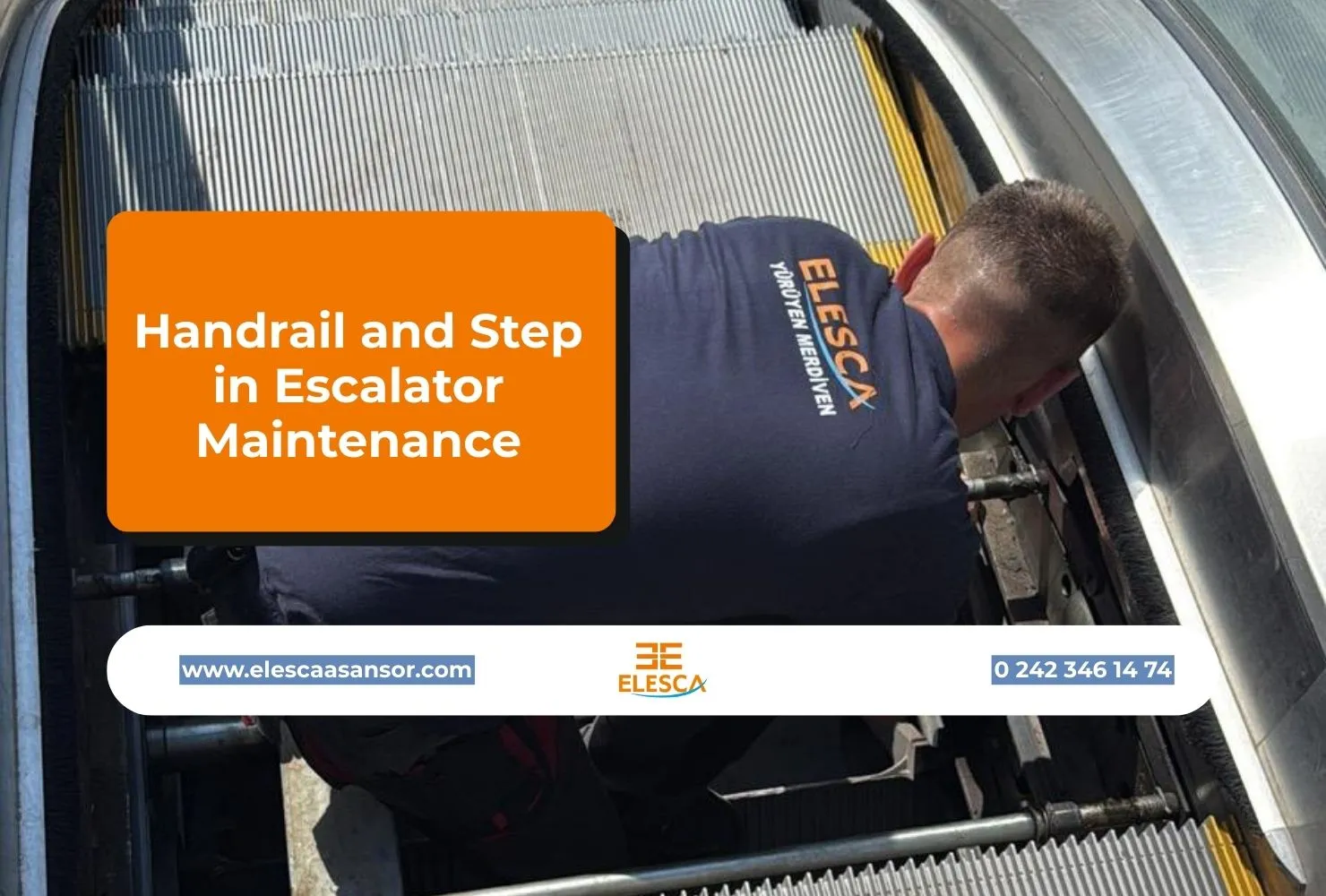
Handrail and Step in Escalator Maintenance
Handrail and Step in Escalator Maintenance Complete Guide for Long-Lasting Performance
Proper escalator maintenance is essential for safety, performance, and long-term service life. Two of the most critical components in every escalator system are the handrail and the step. Because both parts directly interact with passengers, their condition determines both user safety and the smooth operation of the entire system. In this comprehensive guide, we will examine the importance of handrail and step in escalator maintenance, common issues, recommended maintenance practices, and how choosing the right spare parts—such as escalator handrail, step, step roller, step chain, pulley, comb plate, C return chain, handrail inlet cover, and step skirting—can extend the life of your equipment.
As Elesca Elevator & Escalator Systems, we supply top-quality spare parts for both domestic and international markets, ensuring reliability and durability in every project. You can reach us at +90 242 346 14 74 for product support, quotations, and technical guidance.
- Why the Handrail and Step Are Critical in Escalator Maintenance
The handrail and step in escalator maintenance represent the heart of user safety. The handrail supports passengers throughout their ride, while the step transports them safely and smoothly.
Handrail Importance
- Ensures user stability
- Improves rider confidence
- Helps prevent slips and falls
- Gives visual movement synchronization
A worn-out escalator handrail can lead to user accidents, operational noise, and unexpected system shutdowns.
Step Importance
- Provides stable footing
- Works in synchronization with the handrail
- Directly affects overall ride quality
Damaged or worn steps cause misalignment, unusual vibrations, and potentially dangerous user conditions.
Both components require regular inspection, cleaning, lubrication (where needed), and timely replacement with OE-quality parts.
- Understanding the Function of the Escalator Handrail
A high-quality handrail ensures passenger comfort and operational stability. It typically consists of a rubber or PVC blend designed to withstand continuous friction and tension from the drive system.
Common Handrail Problems
- Cracking
- Slippage
- Stretching or shrinking
- Unnatural movement (jumping or jerking)
- Excessive noise
Most of these issues stem from worn pulleys, misaligned handrail inlet covers, or incorrect tension levels. During escalator maintenance, checking these elements is essential.
Why Use Quality Spare Parts?
Elesca Elevator & Escalator Systems provides reliable escalator handrails, pulleys, and handrail inlet covers, ensuring:
- Longer service life
- Smooth movement
- Reduced energy consumption
- Lower maintenance cost
- Understanding the Escalator Step and Its Role in Passenger Safety
The step is the moving platform passengers stand on. Its structural integrity is crucial for safe operation.
Common Step Problems
- Cracked step
- Worn grooves
- Foreign object damage
- Misalignment due to step chain wear
- Roller failure due to defective step rollers
When the step system is compromised, the escalator should be immediately stopped and inspected.
Supporting Components
The step chain, step roller, and comb plate work together to maintain proper movement. If any of these elements are worn, the step cannot operate smoothly.
- Key Spare Parts Used in Handrail and Step Maintenance
To achieve maximum escalator reliability, choosing durable, industry-standard spare parts is the best investment.
Handrail Maintenance Parts
- Escalator handrail
- Handrail inlet cover
- Pulley
- Handrail guides
- Drive and return rollers
Step Maintenance Parts
- Step
- Step roller
- Step chain
- Comb plate
- Step skirting
- C return chain
By selecting high-quality components, escalator owners reduce the risk of:
- Unexpected system stoppages
- Passenger injury
- Frequent repairs
- High long-term operational costs
- Recommended Maintenance Routine for Handrail and Step Systems
A successful handrail and step in escalator maintenance program includes regular checks, scheduled cleaning, part replacements, and lubrication as required.
Daily Checks
- Visual inspection of the handrail surface
- Step alignment control
- Noise monitoring
- Brush condition checks
Weekly Maintenance
- Cleaning the handrail and steps
- Checking comb plates
- Testing safety sensors
- Ensuring proper tension in the handrail
Monthly Maintenance
- Lubricating relevant components
- Inspecting pulleys and rollers
- Checking wear on step chain, step roller, and C return chain
- Testing escalator control panel functions
Each of these tasks ensures stable, reliable operation for both passengers and property owners.
- Safety Considerations in Handrail and Step Maintenance
Safety sits at the center of escalator maintenance. A small oversight in handrail or step inspection can lead to major accidents.
Handrail Safety Checkpoints
- No cracks or fraying
- No sudden speed changes
- Smooth movement along the guide
- Proper synchronization with steps
Step Safety Checkpoints
- Step grooves must be clean
- No deformation or bending
- Step height must align with the comb plate
- Step rollers must rotate properly
The step skirting must be correctly adjusted to prevent entrapment hazards. Likewise, comb plates must be firmly installed to avoid injuries at the entry and exit points.
- Benefits of Using High-Quality Spare Parts in Escalator Maintenance
Choosing engineered, durable components ensures escalators remain operational longer with fewer problems.
- Enhanced Longevity
Quality escalator handrails, steps, rollers, and chains extend system life significantly.
- Superior Ride Comfort
Smooth operation results in:
- Reduced vibration
- Quieter movement
- Improved user satisfaction
- Lower Maintenance Cost
Fewer breakdowns mean fewer labor hours and spare parts purchases.
- Increased Safety
Investing in durable components minimizes risk and ensures compliance with international safety standards.
- Common Issues in Handrail and Step Systems & How to Solve Them
Understanding frequent failure points helps maintenance teams take proactive measures.
Handrail Issues
- Handrail Slippage
Usually caused by tension imbalance or defective pulleys. - Handrail Cracks
Caused by friction, surface wear, or harsh cleaning chemicals. - Handrail Speed Mismatch
Indicates a drive mechanism issue.
Step Issues
- Step Misalignment
Often due to worn step chain or step rollers. - Unusual Step Noise
Indicates lubrication failure or internal component damage. - Step Stoppage
May be caused by foreign objects or damaged comb plates.
Using original and high-performance components from trusted suppliers prevents recurring issues.
- How Elesca Elevator & Escalator Systems Supports Maintenance Needs
Elesca Elevator & Escalator Systems, based in Antalya, provides top-grade escalator spare parts, specializing in the following:
- Escalator handrail
- Pulley
- Step roller
- Step chain
- Comb plate
- Escalator control panel
- Step
- C return chain
- Handrail inlet cover
- Step skirting
Why Choose Elesca?
- Strong partnerships with leading international brands
- High-quality product standards
- Fast delivery for domestic and overseas shipments
- Expert technical knowledge
- Reliable customer service
You can contact us at +90 242 346 14 74 for professional support and product availability.
- The Role of Regular Maintenance in Preventing Escalator Downtime
Downtime causes inconvenience and financial loss, especially in:
- Shopping malls
- Hotels
- Airports
- Public transportation centers
Proper handrail and step in escalator maintenance minimizes downtime by ensuring:
- Consistent operational flow
- Reduced emergency breakdowns
- Higher passenger safety
- Longer equipment lifespan
By following routine inspections and replacing worn parts promptly, escalators remain operational for thousands of hours of uninterrupted service.
- Checklist for Handrail and Step Maintenance
Here is a practical, maintenance-friendly checklist to ensure optimal escalator performance:
Handrail Checklist
- Check handrail tension
- Inspect surface for cracks
- Ensure synchronization
- Look for guide misalignment
- Verify cleanliness
Step Checklist
- Check step roller wear
- Inspect step chain condition
- Confirm step alignment
- Examine comb plates
- Check step skirting distance
Using high-quality spare parts from Elesca greatly enhances overall reliability.
- Final Thoughts: The Importance of Quality in Escalator Handrail and Step Maintenance
The handrail and step in escalator maintenance serve as crucial safety and performance elements. With the right parts, professional support, and regular inspections, escalators can operate smoothly for many years.
Elesca Elevator & Escalator Systems stands as a trusted partner in escalator and moving walk spare parts, offering durable, industry-approved products that guarantee long-term efficiency.
For orders, technical support, and product information, contact us at +90 242 346 14 74.


