
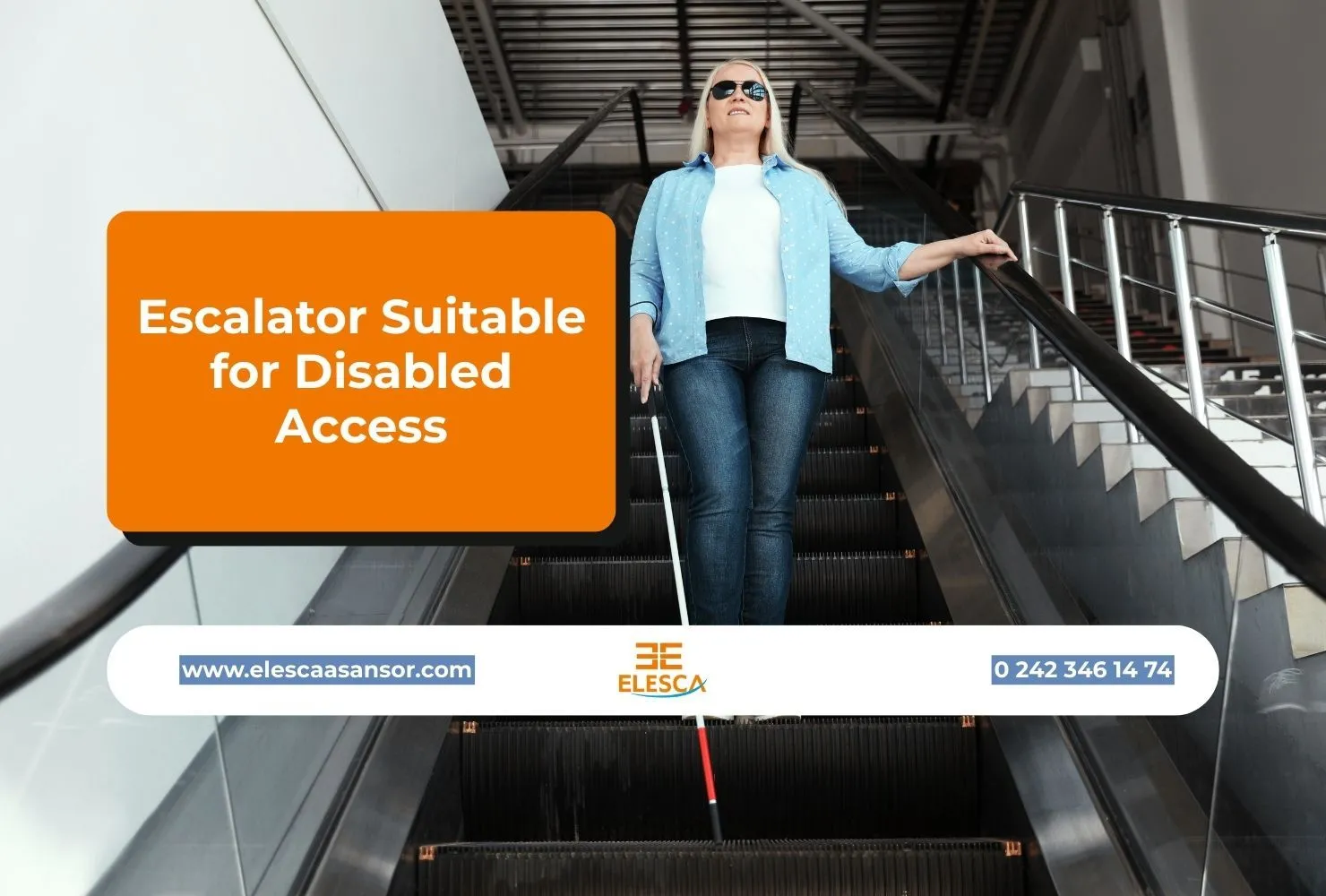
Escalator Suitable for Disabled Access
Escalator Suitable for Disabled Access Design, Components, and Smart Solutions for Inclusive Public Spaces
Creating inclusive public environments is no longer optional—it is a necessity. Modern infrastructure must prioritize accessibility, safety, and comfort for everyone, including elderly individuals, people with mobility limitations, and passengers with temporary disabilities. A properly designed Escalator Suitable for Disabled Access plays a vital role in transportation hubs, shopping malls, hospitals, airports, and commercial buildings.
At Elesca Elevator & Escalator Systems, based in Antalya, we specialize in high-quality elevator, moving walk, and escalator spare parts for domestic and international markets. With advanced components such as Escalator Handrails, Step Rollers, Step Chains, Comb Plates, Escalator Control Panels, and Step Skirting systems, we help ensure that every Escalator Suitable for Disabled Access meets the highest safety and performance standards.
What Is an Escalator Suitable for Disabled Access?
An Escalator Suitable for Disabled Access is an escalator system specifically designed or upgraded to improve safety, usability, and comfort for individuals with reduced mobility. While elevators remain essential for wheelchair users, accessible escalators are highly beneficial for:
- Elderly passengers
- Individuals with limited mobility
- People using canes or crutches
- Parents with children
- Passengers carrying luggage
- Pregnant women
These escalators integrate safety-focused components, optimized step geometry, improved handrail synchronization, and intelligent control systems to enhance accessibility.
Why Accessibility Matters in Modern Infrastructure
Legal and Safety Requirements
Many countries enforce strict accessibility regulations for public buildings. Commercial centers, metro stations, airports, and hospitals must comply with safety and universal design standards.
An Escalator Suitable for Disabled Access contributes to:
- Improved passenger flow
- Reduced accident risks
- Compliance with building regulations
- Enhanced brand reputation
Social Responsibility and Inclusivity
Accessibility reflects a company’s commitment to inclusivity. Public spaces that offer safe vertical transportation demonstrate care for all users.
At Elesca Elevator & Escalator Systems, we support accessibility initiatives by supplying precision-engineered spare parts that help manufacturers and maintenance providers deliver reliable and inclusive escalator systems.
Key Features of an Escalator Suitable for Disabled Access
To qualify as an Escalator Suitable for Disabled Access, certain technical and structural features must be integrated.
- Optimized Step Design
Escalator steps must provide:
- Adequate depth
- Anti-slip surfaces
- Clear demarcation lines
- Stable step-to-step transitions
High-quality Steps and Step Skirting systems reduce the risk of tripping and foot entrapment.
- Durable and Synchronized Escalator Handrails
Handrails are critical for balance and support. An effective Escalator Suitable for Disabled Access requires:
- Smooth surface texture
- Proper speed synchronization with steps
- Comfortable grip diameter
- Long-lasting elasticity
Our Escalator Handrail systems ensure maximum durability and user comfort, especially for elderly passengers who rely heavily on hand support.
- Reliable Step Chain and C Return Chain
The Step Chain and C Return Chain are responsible for stable and consistent step movement. Inaccessible or poorly maintained escalators often create jerky movements, which can be dangerous.
Precision-engineered chains contribute to:
- Smooth ride experience
- Reduced vibration
- Lower noise levels
- Enhanced long-term safety
- High-Performance Step Rollers
Step Rollers play a crucial role in minimizing vibration. An Escalator Suitable for Disabled Access must operate with minimal shaking or instability.
Quality Step Rollers provide:
- Balanced step motion
- Lower friction
- Increased lifespan
- Safer passenger experience
- Safe and Accurate Comb Plate Systems
Comb Plates are positioned where steps meet the landing platform. Poor-quality comb plates increase entrapment risk.
An optimized Comb Plate system ensures:
- Precise step alignment
- Reduced gap risk
- Improved passenger safety
Intelligent Control Systems for Accessibility
An advanced Escalator Suitable for Disabled Access integrates smart control features.
Escalator Control Panel Advantages
Modern Escalator Control Panels allow:
- Soft start and stop functions
- Emergency stop sensitivity
- Speed monitoring
- Fault detection
- Energy-efficient operation
Soft start/stop technology is particularly important for elderly or mobility-impaired passengers who may lose balance during abrupt motion changes.
At Elesca Elevator & Escalator Systems, we supply advanced Escalator Control Panels that help optimize performance and safety.
Design Considerations for Disabled-Friendly Escalators
- Proper Inclination Angle
Standard escalator angles (usually 30–35 degrees) must be carefully selected to ensure user comfort. For accessibility-focused installations, smoother inclinations improve safety.
- Adequate Lighting
Clear step edge lighting enhances visibility, especially for visually impaired passengers.
- Clear Signage
Proper signage should indicate:
- Direction of travel
- Safety instructions
- Alternative accessible routes (elevators)
- Speed Optimization
Reduced or adjustable speed settings can improve safety in sensitive locations such as hospitals or elderly care facilities.
Indoor vs. Outdoor Escalator Suitable for Disabled Access
Indoor Installations
Shopping malls, metro stations, and airports require:
- Climate-resistant components
- Quiet operation
- Aesthetic finishes
- High passenger capacity
Outdoor Installations
Outdoor escalators must withstand:
- Rain and humidity
- Temperature fluctuations
- Dust and corrosion
High-quality Handrail Inlet Covers and corrosion-resistant Step Chains are essential for durability.
Maintenance Requirements for Accessible Escalators
An Escalator Suitable for Disabled Access requires consistent maintenance to remain safe.
Routine Inspections Should Include:
- Step Chain tension checks
- Step Roller condition
- Handrail synchronization
- Comb Plate alignment
- Control panel diagnostics
- Skirting gap measurements
Neglecting maintenance can increase accident risks and reduce accessibility compliance.
Common Challenges in Disabled Access Escalators
- Vibration Issues
Low-quality Step Rollers or worn chains may create instability.
- Handrail Slippage
Improperly synchronized handrails may move at different speeds than steps.
- Step Skirting Entrapment
Incorrect skirting alignment may pose safety hazards.
High-quality spare parts are the foundation of a safe and reliable Escalator Suitable for Disabled Access.
Why Choose Elesca Elevator & Escalator Systems?
Elesca Elevator & Escalator Systems, based in Antalya, supplies premium elevator, moving walk, and escalator spare parts to both domestic and international markets.
Our Strengths:
- High-quality manufacturing standards
- Compatibility with leading global brands
- Reliable export network
- Professional solution partnerships
- Competitive pricing
We supply:
- Escalator Handrail
- Pulley
- Step Roller
- Step Chain
- Comb Plate
- Escalator Control Panel
- Step
- C Return Chain
- Handrail Inlet Cover
- Step Skirting
Every component we provide supports the performance and safety of an Escalator Suitable for Disabled Access.
Benefits of Installing an Escalator Suitable for Disabled Access
- Enhanced Safety
Improved grip, stability, and smooth motion reduce accidents.
- Better Passenger Flow
Accessible escalators reduce congestion in public areas.
- Compliance with Regulations
Meets accessibility and safety standards.
- Increased Property Value
Modern, inclusive buildings attract more tenants and customers.
- Long-Term Cost Efficiency
Durable spare parts reduce maintenance frequency.
Industries That Benefit from Accessible Escalators
- Airports
- Metro Stations
- Shopping Malls
- Hospitals
- Hotels
- Commercial Complexes
- Government Buildings
An Escalator Suitable for Disabled Access ensures these facilities remain safe and user-friendly.
How to Upgrade an Existing Escalator for Disabled Access
Many facilities already have escalators but need modernization.
Upgrade Options Include:
- Replacing Step Rollers
- Installing advanced Escalator Control Panels
- Upgrading Comb Plates
- Improving Handrail systems
- Adjusting speed settings
- Renewing Step Skirting
Modernization is often more cost-effective than full replacement.
Safety Tips for Users
Even with an Escalator Suitable for Disabled Access, safe usage is essential:
- Hold the handrail at all times
- Stand in the center of the step
- Avoid loose clothing near skirting
- Assist elderly passengers when needed
- Use elevators for wheelchairs
Future Trends in Accessible Escalator Technology
The industry is evolving toward:
- AI-based fault monitoring
- Energy-saving smart drives
- Enhanced anti-slip materials
- Sensor-based passenger detection
- Remote maintenance diagnostics
These innovations will make the next generation of Escalator Suitable for Disabled Access even safer and more efficient.
Partner with Elesca Elevator & Escalator Systems
If you are planning a new installation or upgrading an existing escalator, choosing high-quality spare parts is essential for long-term performance and accessibility compliance.
Elesca Elevator & Escalator Systems
Antalya, Türkiye
Phone: +90 242 346 14 74
We are committed to delivering reliable escalator components that support safe, durable, and fully optimized Escalator Suitable for Disabled Access solutions worldwide.
Frequently Asked Questions
What makes an Escalator Suitable for Disabled Access different from a standard escalator?
It includes enhanced safety features such as smooth start/stop control, anti-slip steps, reliable handrails, and optimized motion stability.
Can existing escalators be upgraded?
Yes. Replacing components like Step Rollers, Comb Plates, Step Chains, and Control Panels significantly improves accessibility.
Is an escalator enough for wheelchair users?
No. Elevators are required for wheelchair access. Accessible escalators improve safety for individuals with limited mobility but do not replace elevators.
How often should maintenance be performed?
Routine inspections should be conducted monthly, with detailed servicing scheduled according to usage intensity.
An Escalator Suitable for Disabled Access is more than a mechanical system—it is a commitment to safety, inclusivity, and modern engineering excellence. By choosing premium spare parts and expert solutions from Elesca Elevator & Escalator Systems, you ensure long-term performance, regulatory compliance, and maximum passenger comfort.


