
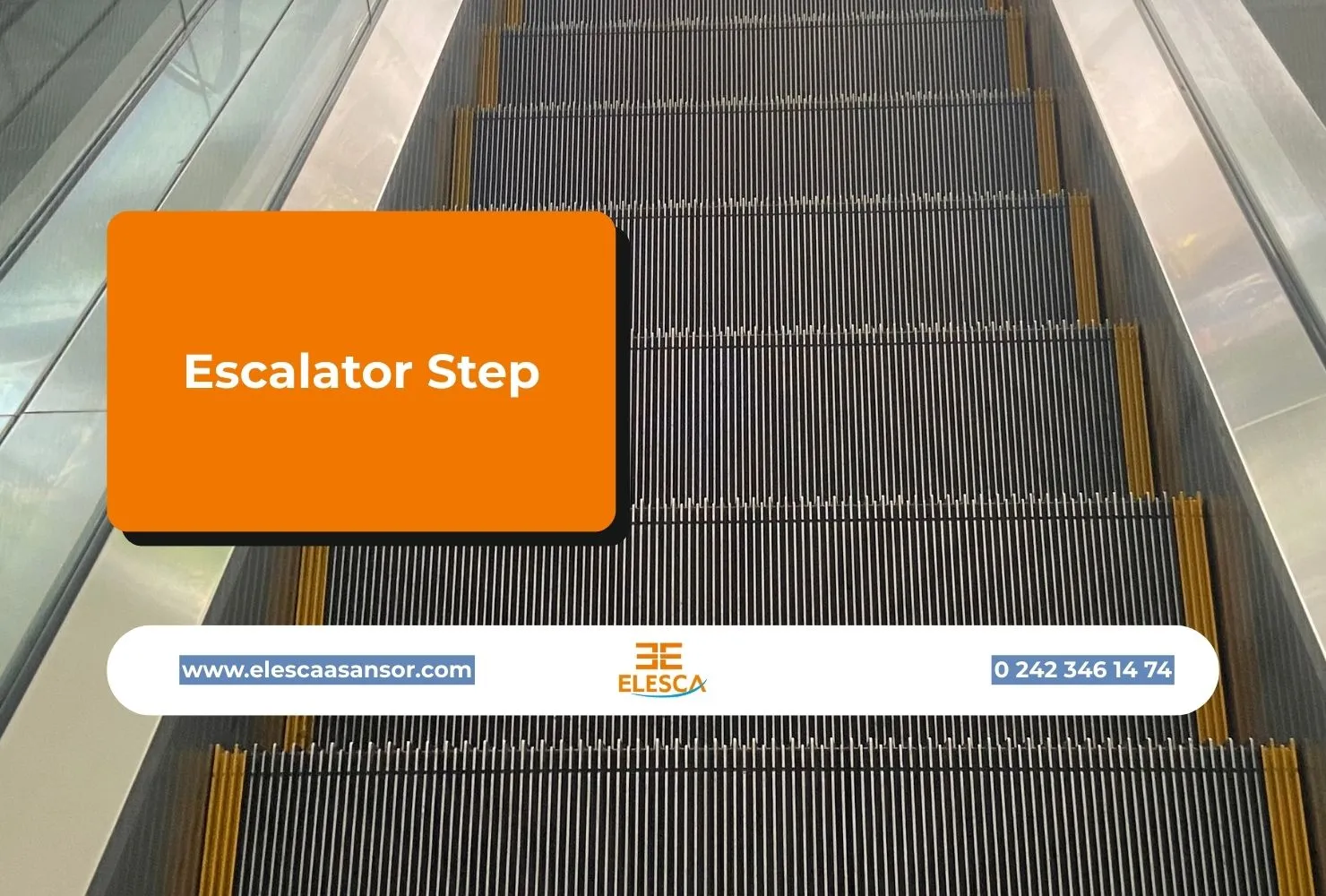
Escalator Step
Escalator Step Comprehensive Guide to Structure, Safety, Maintenance & Replacement
The escalator step is one of the most essential components determining the comfort, safety, and functionality of any escalator system. As millions of people use escalators daily in shopping malls, airports, hotels, business centers, and metro stations, ensuring that each escalator step performs reliably is critical for operational safety and user experience. In this detailed guide, you will learn everything about escalator step design, materials, working principles, maintenance practices, replacement solutions, and industry standards.
At Elesca Elevator & Escalator Systems, we supply high-quality escalator and moving walk spare parts for both domestic and international markets. With expert partners and globally trusted brands, we ensure optimal performance for every escalator component, including escalator step, escalator handrail, pulley, step roller, step chain, comb plate, escalator control panel, C return chain, handrail inlet cover, and step skirting.
For orders, support, or technical guidance, contact us at +90 242 346 14 74.
What Is an Escalator Step?
An escalator step is the moving platform that passengers stand on while being transported between floors. Each step is engineered to interlock seamlessly with others, ensuring smooth and safe motion throughout the escalator’s cycle. These steps are built to withstand heavy daily use, sudden loads, and environmental factors like humidity, dust, and temperature changes.
This component is more than a simple platform; it is a precisely engineered unit that integrates with:
- Step rollers
- Step chain
- Comb plate
- C return chain
- Escalator control panel signals
- Step skirting guides
The synchronized operation of these components ensures uninterrupted and safe escalator movement.
Key Features of a High-Quality Escalator Step
A premium escalator step includes several characteristics that define its durability and performance. Manufacturers design these steps with advanced technologies to comply with stringent international safety standards such as EN 115 and ISO norms.
- High Load-Bearing Capacity
The escalator step must support constant passenger flow and intense mechanical stress. Heavy-duty aluminum or stainless-steel alloys are used to achieve superior load resistance.
- Anti-Slip Surface Design
Safety begins with traction. The ribbed design prevents slipping by ensuring better shoe grip. Combined with the comb plate engagement, this structure helps avoid accidents and entrapment.
- Perfect Interlocking Mechanism
Each escalator step must fit flawlessly with adjacent steps. The interlocking design ensures stability during ascent, descent, and horizontal transitions.
- Step Roller Compatibility
Step rollers ensure smooth movement along the escalator track. A good escalator step is designed with precise roller insertion points to guarantee balance and noise-free operation.
- Fire and Corrosion Resistance
For long-term durability, escalator steps undergo special coating or anodizing processes to resist corrosion, moisture, and chemicals.
How the Escalator Step Works Inside the System
The escalator step moves along a track guided by the step chain and supported by step rollers. The escalator control panel sends commands to synchronize each component.
Here is a simplified operation cycle:
- The drive motor rotates the main shaft.
- The step chain pulls the escalator step forward.
- Step rollers glide along tracks, allowing smooth movement.
- At the landing area, steps flatten into a staircase-like formation.
- Steps pass beneath the comb plate where the surface narrows to prevent entrapment hazards.
- The returning path is guided by the C return chain.
This coordinated process ensures that the escalator step always maintains a secure and safe shape for passengers.
Escalator Step Material Options
The material used for an escalator step impacts weight, durability, and safety. The most common types include:
- Die-Cast Aluminum Steps
- Lightweight
- Corrosion-resistant
- Excellent structural strength
- Ideal for heavy passenger traffic
- Stainless Steel Steps
- Preferred for outdoor escalators
- Superior corrosion and chemical resistance
- Longer lifespan in harsh environments
- Reinforced Steel Steps
- Heavy-duty applications
- Often used in industrial or transport hubs
Each material is selected based on the escalator’s installation environment, load requirements, and maintenance frequency.
Why High-Quality Escalator Steps Matter
A reliable escalator step directly affects:
- Passenger Safety
Faulty or worn steps can cause trips or entrapment incidents. High-quality materials and precision engineering significantly reduce risks.
- System Longevity
Poor-quality steps increase wear on related components such as step rollers, step skirting, and pulley systems.
- Maintenance Costs
Durable steps reduce replacements and downtime, ensuring cost-effective operation for facility owners.
- Operational Comfort
A high-quality escalator step provides smoother movement and reduced vibration, improving user comfort.
Common Problems Seen in Escalator Steps
Even the most robust escalator step may require repair or replacement due to constant usage. Early detection is key to preventing safety hazards.
- Cracked Step Body
Heavy loads or metal fatigue can cause cracks. This is a serious safety risk and requires immediate replacement.
- Damaged Step Rollers
Since step rollers guide the step along the track, any damage causes noise, vibration, or misalignment.
- Broken Interlocking Teeth
The grooves or teeth that lock with the comb plate may wear out or break, risking entrapment accidents.
- Corrosion Issues
Outdoor or humid environments can cause rust or aluminum oxidation.
- Misalignment with Step Chain
A worn step chain can cause inconsistent movement, affecting the step’s position.
If any of these issues are present, the escalator must be taken out of service until repairs are completed.
Maintenance Recommendations for Escalator Steps
Regular maintenance prevents major failures and enhances safety.
- Daily Visual Inspection
Technicians should check the escalator step for cracks, dirt buildup, or unusual sounds.
- Lubrication of Step Rollers and Chains
Although steps themselves do not require lubrication, their associated components like step rollers and step chain do.
- Deep Cleaning
Dirt accumulation under the steps can affect the movement path. Proper cleaning ensures smooth operation and prevents premature wear.
- Alignment Tests
Misalignment can cause friction between the step skirting and the escalator step. Regular alignment is essential.
- Comb Plate Gap Measurement
The gap between the comb plate and step nose must comply with safety standards.
- Replacement of Worn Components
Steps, rollers, chains, and plates should be replaced according to manufacturer recommendations.
When Should an Escalator Step Be Replaced?
A facility should replace an escalator step when:
- Cracks or fractures appear.
- The anti-slip surface is worn down.
- The interlock teeth no longer match the comb plate.
- Step rollers no longer hold proper positioning.
- The step is bent or misaligned.
- Corrosion significantly affects structural integrity.
Replacing the step before a major failure prevents costly system damage and ensures user safety.
Choosing the Right Escalator Step for Your System
Every escalator model requires compatible parts. When selecting a new escalator step, consider:
- Brand Compatibility
Major brands use specific designs. Accurate matching is essential.
- Step Width & Dimensions
Common widths include 600 mm, 800 mm, and 1000 mm.
- Material Strength Requirements
Indoor vs outdoor usage demands different materials.
- Roller Specification
Proper roller size ensures smooth operation.
- Chain Interface
The step chain must match the step’s mounting points.
- Compliance with International Standards
Steps must meet EN 115 or equivalent safety regulations.
Elesca Elevator & Escalator Systems supplies fully compatible, OEM-quality steps for all major global brands.
Why Choose Elesca Elevator & Escalator Systems for Escalator Steps?
Based in Antalya, our company delivers world-class spare parts for escalators, elevators, and moving walks. We work with industry-leading manufacturers and expert partners to provide reliable, long-lasting solutions.
Our Advantages Include:
- Premium-quality escalator step options for all major brands
- Durable materials and precision manufacturing
- Large domestic and international supply network
- Fast delivery and professional support
- Competitive pricing
- Full range of spare parts:
Escalator Handrail, Pulley, Step Roller, Step Chain, Comb Plate, Escalator Control Panel, C Return Chain, Handrail Inlet Cover, Step Skirting, and more
Call us at +90 242 346 14 74 for assistance or product inquiries.
Additional Components That Enhance Escalator Step Performance
- Step Rollers
Help maintain smooth motion along the track and reduce noise.
- Step Chain
Ensures synchronized movement of all steps.
- Comb Plate
Protects passengers from entrapment during step-to-platform transitions.
- Step Skirting
Prevents lateral contact between passengers and the moving steps.
- Handrail Inlet Cover
Improves safety at the beginning and end of the handrail system.
- Escalator Control Panel
Regulates movement, speed, safety sensors, and step synchronization.
High-quality components ensure that the escalator step operates flawlessly within the larger system.
Best Practices for Extending Escalator Step Lifespan
To keep your escalator step performing for years, follow these professional recommendations:
- Avoid operating escalators at maximum capacity for long durations.
- Schedule inspections every 30–90 days depending on traffic intensity.
- Keep surfaces free from water, oil, or chemicals.
- Maintain proper step chain tension.
- Ensure step rollers rotate freely and silently.
- Replace any damaged parts immediately.
- Use only OEM-quality replacement parts.
Correct maintenance extends the escalator’s lifespan and reduces operational costs.
The escalator step is one of the foundational components that ensures user safety, operating efficiency, and system durability. By choosing high-quality steps and maintaining them regularly, facility owners can significantly reduce breakdowns, increase performance, and enhance overall safety.
Elesca Elevator & Escalator Systems proudly supplies premium escalator and moving walk spare parts, serving both domestic and international markets with superior expertise. Whether you need a single escalator step or a full parts package—including step rollers, step chain, comb plate, handrail inlet cover, step skirting, and more—our team is ready to support you.
For professional guidance, quotations, or wholesale inquiries, contact us at +90 242 346 14 74.


