
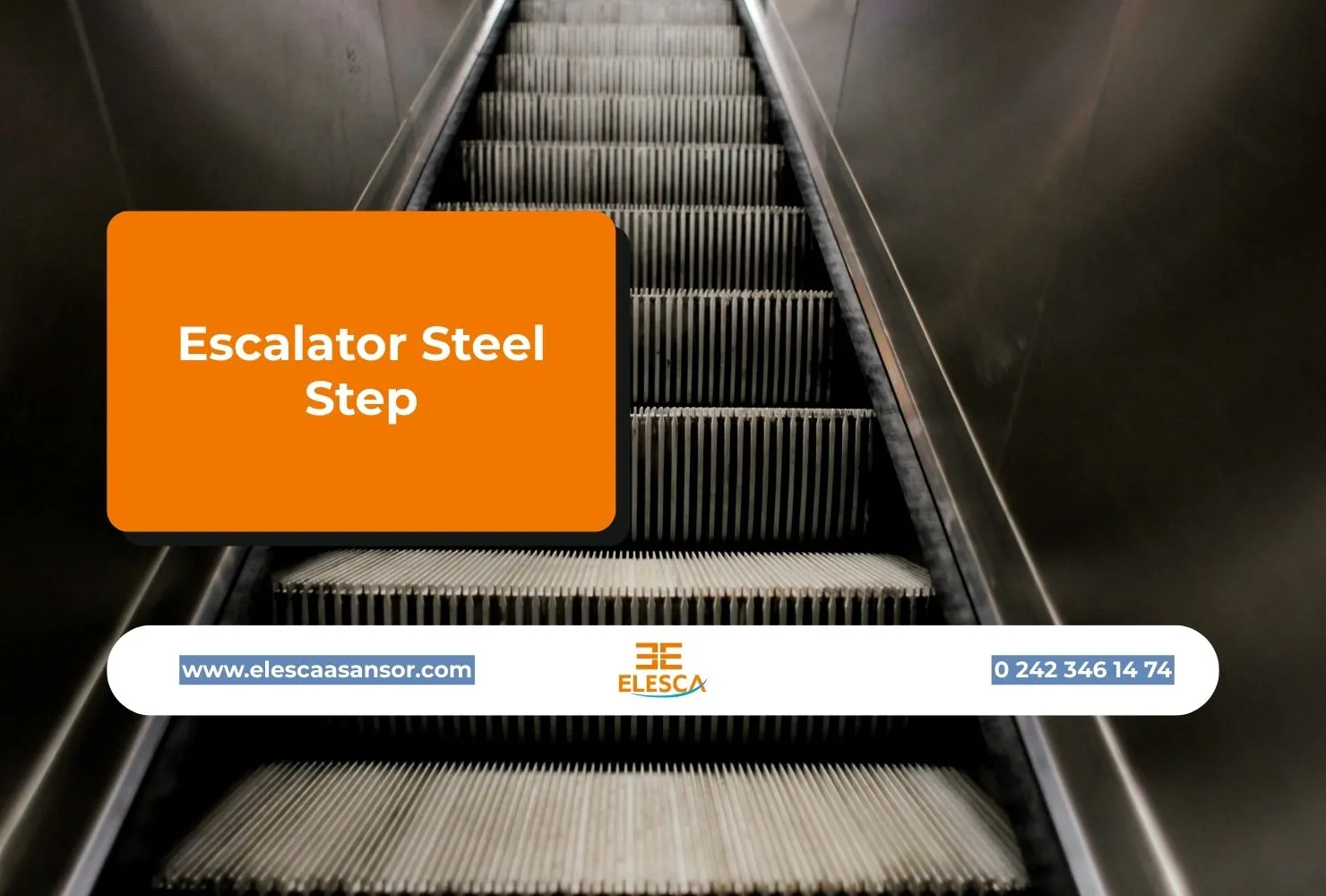
Escalator Steel Step
Escalator Steel Step Guide Structure, Safety, Durability, and Selection Tips
The Escalator Steel Step is one of the most critical components of modern escalator systems, directly responsible for passenger safety, comfort, and smooth transportation. As millions of people use escalators every day in shopping centers, airports, hotels, metro stations, hospitals, and business towers, the durability and engineering quality of steel steps become decisive factors. In this comprehensive guide, we will explore the features, benefits, materials, manufacturing standards, maintenance requirements, and selection tips for the Escalator Steel Step.
Elesca Elevator & Escalator Systems, based in Antalya, provides high-quality spare parts including Escalator Handrails, Pulleys, Step Rollers, Step Chains, Comb Plates, Escalator Control Panels, Steps, C Return Chains, Handrail Inlet Covers, and Step Skirtings for domestic and international markets. For inquiries, you can contact us at +90 242 346 14 74.
What Is an Escalator Steel Step?
An Escalator Steel Step is the main platform on which passengers stand while being transported from one floor to another. These steps are engineered from high-strength steel to withstand continuous cycles of load, friction, and motion. Their ribbed design improves passenger grip, prevents slipping, and supports safe operation even in high-traffic environments.
Key functions include:
- Supporting passenger weight
- Ensuring stable movement with Step Roller and Step Chain integration
- Preventing slipping with surface tread patterns
- Aligning precisely with the Comb Plate for safe entry and exit
- Maintaining structural integrity under constant load
Because escalators operate non-stop for long hours, the material quality and engineering precision of the Escalator Steel Step play a vital role in system longevity and safety.
Why High-Quality Escalator Steel Steps Matter
Using high-quality Escalator Steel Steps enhances the overall performance and reliability of escalators. Poorly manufactured steps increase downtime, maintenance costs, and safety risks. A premium steel step offers the following advantages:
- Durability and Load Capacity
Steel steps must sustain heavy loads thousands of times per day. High-quality steel ensures resilience against:
- Deformation
- Cracks
- Abrasion
- Fatigue failure
- Passenger Safety
Slip-resistant tread patterns and precise alignment reduce accident risks at entry and exit points, especially where the step meets the Comb Plate.
- Long Service Life
A durable Escalator Steel Step reduces long-term maintenance expenses and extends the operational lifespan of the escalator.
- Smooth Operation
When paired with quality components such as Step Rollers and Step Chains, the escalator runs more quietly and efficiently, minimizing vibration and sudden movements.
Structural Features of an Escalator Steel Step
- High-Strength Steel Body
The core structure is manufactured from reinforced steel, offering maximum durability under high traffic and constant movement.
- Tread Surface
The upper surface features a ribbed or grooved pattern for non-slip properties. This design is crucial for preventing slips, especially in areas exposed to moisture.
- Side Panels
These panels ensure perfect guidance between the escalator’s Step Skirting and the step itself, preventing friction and contact.
- Step Axle and Roller Housing
The underside includes fittings for Step Rollers, ensuring smooth rotation along the escalator tracks.
- Comb Plate Interface
Every Escalator Steel Step is engineered to meet precisely with the Comb Plate, preventing entrapment hazards.
Materials Used in Escalator Steel Step Manufacturing
Manufacturers use high-grade materials to ensure longevity and safety:
- Carbon Steel: Provides strength and structural durability
- Aluminum Alloys (for some models): Used for lightweight designs
- Heat-Treated Steel: Improves resistance to deformation
- Anti-Corrosive Coatings: Protects the step against humidity, salt, and chemicals
Premium steps are typically finished with powder coating or galvanization to resist corrosion and increase surface hardness.
Types of Escalator Steel Steps
- Standard Steel Steps
Designed for malls, hotels, corporate buildings, and public areas with moderate traffic.
- Heavy-Duty Steel Steps
Ideal for airports, metro stations, stadiums, and high-traffic environments.
- Grooved Steel Steps
Enhanced anti-slip features for escalators operating in environments prone to moisture.
- Custom-Sized Steel Steps
For specialized escalators with unique dimensions or brand-specific requirements.
Elesca Elevator & Escalator Systems supplies compatible steps for major global brands, ensuring perfect fit and performance.
How Escalator Steel Steps Work with Other Components
Step Roller Integration
The Step Roller attaches beneath each step and guides it along the escalator tracks.
Smooth operation depends on:
- Roller material quality
- Bearing precision
- Compatibility with the step’s mounting points
Step Chain Connection
Each Escalator Steel Step is connected to the Step Chain, forming a continuous loop. This connection guarantees synchronized movement, ensuring passengers feel no abrupt shifts.
Comb Plate Alignment
As passengers enter or exit the escalator, the step must meet the Comb Plate seamlessly to avoid tripping hazards. High-precision manufacturing ensures proper alignment.
Handrail Synchronization
The Escalator Handrail moves at the same speed as the steps. Structural precision of the steel steps contributes to balanced handrail-step synchronization.
Maintenance Tips for Escalator Steel Steps
Regular maintenance ensures safety and extends escalator lifespan. Key maintenance practices include:
- Periodic Cleaning
Dust, debris, and grease must be removed regularly to prevent slippage and corrosion.
- Step Roller Inspection
Damaged or worn rollers affect step alignment and create vibration. Replace them early to avoid further damage.
- Step Chain Maintenance
Lubrication and tension adjustments keep steps running smoothly. Misalignment can cause the entire system to malfunction.
- Comb Plate Checks
Sharp edges, misalignment, or wear in the Comb Plate can lead to safety risks.
- Structural Integrity Analysis
Cracks, bends, or surface deformation in the steel step require immediate replacement.
- Skirting Panel Clearance
Proper distance between steps and Step Skirting prevents friction and noise.
Signs Your Escalator Steel Step Needs Replacement
Ignoring the following signs can result in operational hazards:
- Visible cracks on the step surface
- Worn tread patterns
- Deformed edges
- Excessive vibration
- Noise from Step Roller areas
- Improper alignment with the Comb Plate
- Step chain pulling or irregular movement
Timely replacement prevents escalator downtime and ensures passenger safety.
How to Choose a High-Quality Escalator Steel Step
When selecting steel steps for escalator maintenance or replacement, consider the following criteria:
- Compatibility
Ensure the step matches the brand and model of your escalator system.
- Material Quality
Choose reinforced steel with anti-corrosive coating for long-term durability.
- Load Capacity
For high-traffic environments, select heavy-duty models.
- Manufacturing Standards
Steps must comply with worldwide escalator safety standards.
- Supplier Reliability
Choosing a supplier with industry experience ensures professional support and high-quality products.
Elesca Elevator & Escalator Systems offers reliable worldwide delivery and expert product support.
Where to Buy Escalator Steel Steps
Elesca Elevator & Escalator Systems supplies durable, high-precision Escalator Steel Steps to domestic and international clients. Our steps are compatible with multiple escalator brands and engineered to meet global safety standards.
Why Choose Us?
- Wide product range
- High-quality materials
- International shipping
- Professional technical support
- Reliable stock availability
- Competitive pricing
For escalator spare parts such as Escalator Handrails, Pulleys, Step Rollers, Comb Plates, Step Chains, Escalator Control Panels, Steps, C Return Chains, Handrail Inlet Covers, and Step Skirtings, you can always rely on Elesca.
📞 Contact: +90 242 346 14 74
📍 Antalya, Türkiye
🏢 Elesca Elevator & Escalator Systems
Advantages of Buying Escalator Steel Steps from a Trusted Supplier
Working with a professional supplier provides:
✓ Guaranteed Quality
All steps meet international safety and manufacturing standards.
✓ Perfect Component Matching
Ensures excellent compatibility with Step Roller, Step Chain, and Comb Plate.
✓ Long-Term System Support
Availability of spare parts ensures escalators remain operational with minimal downtime.
✓ Technical Guidance
Expert support during selection and installation.
Installation Tips for Escalator Steel Steps
To ensure optimal performance, installation must be done by trained professionals. Below are the recommended best practices:
- Verify step alignment before tightening bolts
- Inspect Step Rollers and chains for wear
- Clean track surfaces to avoid debris interference
- Confirm Comb Plate alignment after installation
- Test the escalator at low speed first
- Recheck synchronization between step movement and handrail speed
Incorrect installation may cause operational problems or safety risks. Always follow manufacturer guidelines.
Frequently Asked Questions About Escalator Steel Step
- What is the lifespan of an Escalator Steel Step?
With regular maintenance, high-quality steel steps can last 10–20 years depending on usage intensity.
- Can damaged steel steps be repaired?
Minor surface wear can be treated, but structural damage requires full replacement for safety.
- Are all steel steps the same size?
No. Sizes vary according to escalator brand, model, and system specifications.
- What affects steel step wear the most?
High passenger load, moisture, step chain tension issues, and worn rollers accelerate wear.
Conclusion
The Escalator Steel Step is a vital component that combines safety, durability, and engineering precision. Whether used in high-traffic metro stations or luxury hotels, the steel step directly affects the reliability and lifespan of the entire escalator system. Choosing high-quality steel steps and maintaining them properly ensures both safety and long-term performance.
Elesca Elevator & Escalator Systems proudly supplies premium escalator spare parts—including Escalator Steel Steps, Handrails, Pulleys, Step Rollers, Comb Plates, Step Chains, Escalator Control Panels, C Return Chains, Handrail Inlet Covers, and Step Skirtings—to customers in Türkiye and around the world.
For professional support and high-quality products, contact us today:
📞 +90 242 346 14 74
🏢 Elesca Elevator & Escalator Systems – Antalya


