
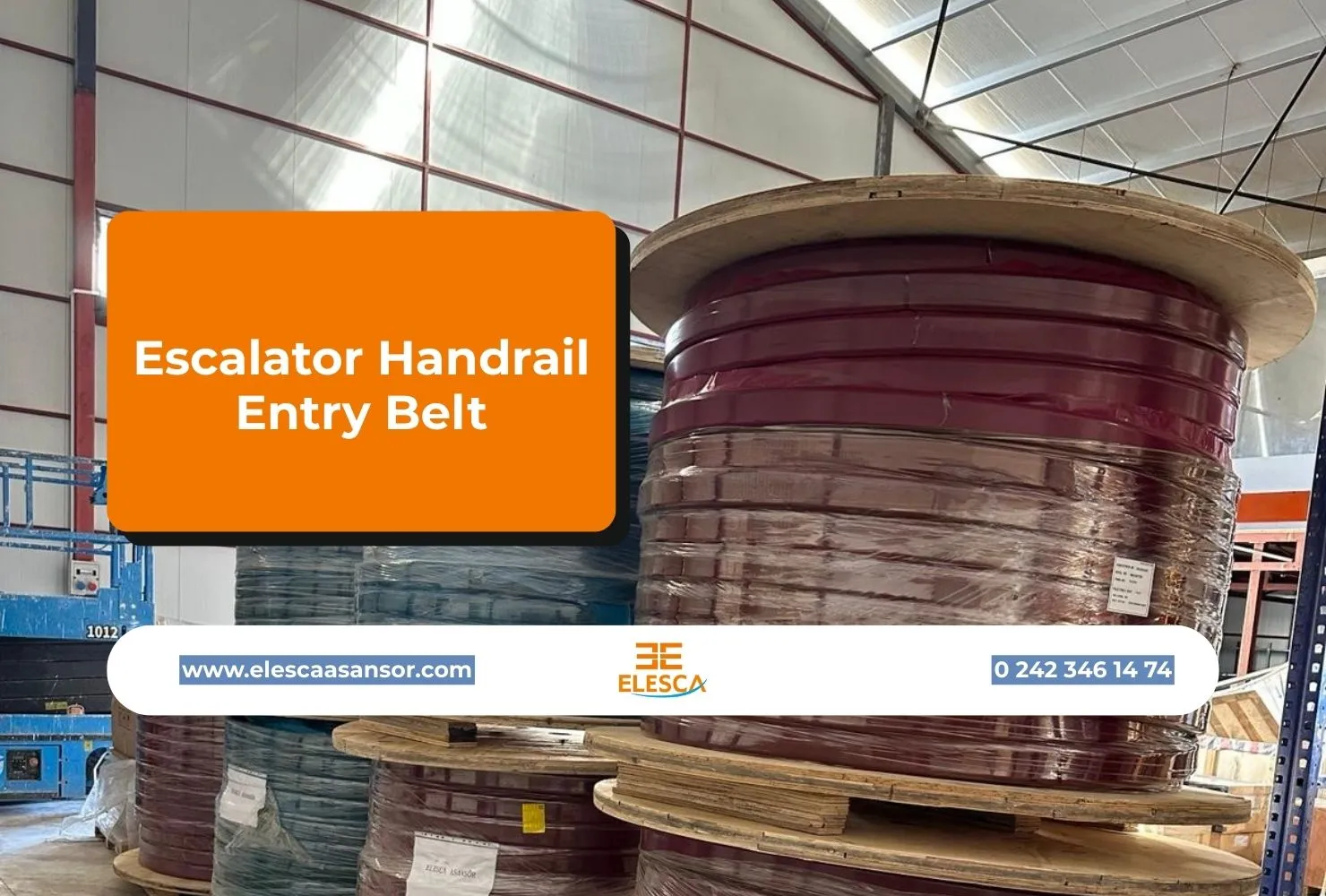
Escalator Handrail Entry Belt
Escalator Handrail Entry Belt Complete Guide, Function, Importance, and Selection Tips
Modern commercial buildings rely heavily on escalators to ensure safe and efficient flow of people. While many components work together to keep an escalator functioning smoothly, one of the most crucial yet often overlooked elements is the Escalator Handrail Entry Belt. This component plays a significant role in ensuring user safety, smooth operation, and long-term system durability.
In this comprehensive guide, we will explain what an Escalator Handrail Entry Belt is, how it works, why it is important, and what factors you should consider when purchasing or replacing it. As Elesca Elevator & Escalator Systems, a leading supplier based in Antalya, we proudly provide high-quality escalator spare parts to both domestic and international markets. With our expertise and reliable product range, including Escalator Handrail, Pulley, Step Roller, Step Chain, Comb Plate, Escalator Control Panel, Step, C Return Chain, Handrail Inlet Cover, and Step Skirting, we offer durable and trusted solutions for escalator maintenance and modernization.
What Is an Escalator Handrail Entry Belt?
The Escalator Handrail Entry Belt is a key component located at the point where the escalator handrail enters the balustrade. Its main function is to guide the handrail smoothly into the internal mechanism, preventing friction, misalignment, and operational interruptions.
This belt acts as a transition element, ensuring that the Escalator Handrail remains properly aligned as it starts its closed-loop cycle. Without this component, escalator handrails would frequently slip, vibrate, or wear out prematurely.
Why the Escalator Handrail Entry Belt Is Essential
A high-quality Escalator Handrail Entry Belt provides multiple essential benefits:
- Ensures Smooth Handrail Movement
The belt guides the handrail evenly into its track, reducing friction and eliminating sudden jerking motions. This ensures that the handrail moves consistently with the steps, which is crucial for passenger safety.
- Prevents Operational Wear and Tear
Misaligned or unsupported handrails can cause significant strain on internal components such as the Pulley, Step Roller, and C Return Chain. A reliable entry belt reduces mechanical stress, minimizing maintenance costs and extending the escalator’s lifespan.
- Enhances User Safety
Passengers naturally rely on the handrail for balance. A poorly guided handrail can lead to unsafe gaps, wobbling, or unexpected vibrations. A durable Escalator Handrail Entry Belt ensures safe and stable handrail movement throughout the ride.
- Reduces Noise and Vibration
One common issue with worn or low-quality entry belts is excessive noise. Replacing them with a high-quality product significantly reduces operational noise and enhances user comfort.
How the Escalator Handrail Entry Belt Works
The Escalator Handrail Entry Belt operates as part of the handrail’s continuous loop system. Its primary role is to:
- Guide the handrail toward the drive mechanism
- Maintain correct tension
- Keep the handrail aligned with the balustrade
- Reduce friction between the handrail and metal surfaces
Together with complementary components such as the Handrail Inlet Cover, Escalator Control Panel, and various rollers, the entry belt ensures that the entire system functions with precision.
Common Problems Caused by a Faulty Entry Belt
A worn or damaged Escalator Handrail Entry Belt can lead to several operational issues:
- Handrail Slippage
When the belt loses friction or alignment, the handrail may move slower or faster than the steps, creating unsafe conditions.
- Excessive Wear on Adjacent Parts
Components like the Pulley, Step Roller, Comb Plate, and Step Chain may experience premature damage due to increased tension or friction.
- Increased Operating Noise
A faulty belt often produces unpleasant grinding or scraping sounds.
- Safety Risks for Passengers
Gaps, shaking handrails, or sudden jerks can lead to accidents, especially during peak usage.
- Electrical or Mechanical Shutdowns
The escalator’s safety system may detect irregularities and trigger automatic shutdown to avoid further damage.
Signs You Need to Replace the Escalator Handrail Entry Belt
To keep escalators functioning at their best, maintenance teams should monitor the following signs:
- Visible cracks, tearing, or deformation on the belt
- Noticeable handrail vibration
- Slow responsiveness when pressure is applied
- Noise coming from the handrail entry point
- Mismatch between handrail and step speed
- Frequent stoppages in the escalator mechanism
If any of these symptoms are present, replacing the Escalator Handrail Entry Belt becomes essential.
Choosing the Right Escalator Handrail Entry Belt
When selecting an entry belt, quality and compatibility are the most critical considerations. Here are the key factors:
- Material Quality
High-durability rubber or reinforced composite materials provide superior performance against wear, friction, and temperature changes.
- Compatibility with Escalator Models
Every escalator brand and model has specific requirements. Entry belts must match:
- Belt size
- Curvature
- Thickness
- Positioning brackets
- Handrail type
This ensures seamless integration with the Escalator Handrail, Pulley, and supporting mechanisms.
- Resistance to Heat and Friction
Since the belt continuously interacts with moving surfaces, it must withstand constant friction without losing elasticity.
- Noise Reduction Performance
Premium belts are designed to operate quietly even during heavy usage.
- Brand Reliability
Working with trusted suppliers like Elesca Elevator & Escalator Systems ensures long-lasting performance and high product standards.
Maintenance Tips for Escalator Handrail Entry Belts
To extend the lifespan of an Escalator Handrail Entry Belt, regular maintenance is essential. Here’s what technicians should follow:
- Clean the Entry Area Frequently
Dust, grease, and debris can reduce belt performance and increase friction.
- Inspect Tension and Alignment
Proper belt tension prevents handrail slippage and ensures smooth operation.
- Check Adjacent Components
Parts such as the Handrail Inlet Cover, Step Skirting, Comb Plate, and Step Chain must be inspected to ensure the entire mechanism works seamlessly.
- Replace at Signs of Wear
Delaying replacement can cause further mechanical issues and increase repair costs.
Why Choose Elesca Elevator & Escalator Systems?
Based in Antalya, Elesca Elevator & Escalator Systems provides premium escalator and moving walk spare parts for domestic and international partners. Our expertise, extensive product line, and high-performance solutions make us a preferred supplier in the industry.
Our Product Range Includes:
- Escalator Handrail
- Pulley
- Step Roller
- Step Chain
- Comb Plate
- Escalator Control Panel
- Step
- C Return Chain
- Handrail Inlet Cover
- Step Skirting
We work with leading global brands and certified solution partners to ensure exceptional durability, precision, and safety.
Customer-Focused Solutions
- Fast delivery
- Reliable product availability
- Technical guidance
- International shipping options
- Competitive pricing
For orders or technical support, you can contact us directly at:
+90 242 346 14 74
How to Install an Escalator Handrail Entry Belt
While installation should always be performed by trained escalator technicians, the general workflow includes:
- Power Shutdown and Safety Setup
Before starting, the escalator must be completely turned off and secured.
- Removal of Protective Covers
Technicians remove the Handrail Inlet Cover and adjacent panels to access the belt.
- Removal of the Old Belt
Any damaged or worn Escalator Handrail Entry Belt is detached and inspected.
- Installation of the New Belt
The new belt must be aligned correctly with the handrail pathway and tensioned precisely.
- Testing and Adjustment
Handrail movement, tension, alignment, and noise levels are tested before closing the system.
Frequently Asked Questions (FAQ)
What is the main function of the Escalator Handrail Entry Belt?
Its primary function is to guide the handrail smoothly into the balustrade system while maintaining alignment and reducing friction.
How often should entry belts be replaced?
Replacement depends on usage volume and maintenance routines. On average, they should be inspected every 6–12 months.
Can a faulty entry belt cause escalator shutdowns?
Yes. Misalignment, noise, and friction can trigger safety sensors, stopping the escalator automatically.
Is the entry belt universal?
No. Entry belts must be compatible with specific escalator brands and models.
Where can I buy high-quality entry belts?
Elesca Elevator & Escalator Systems offers premium-grade Escalator Handrail Entry Belt products with international delivery.
The Escalator Handrail Entry Belt is a crucial component that ensures safe, reliable, and seamless escalator operation. From guiding the handrail to reducing friction, minimizing noise, and protecting internal components, its role is essential for both performance and passenger safety.
Choosing a high-quality entry belt and maintaining it properly will not only extend the escalator’s lifespan but also reduce maintenance costs and operational disruptions. With the support of Elesca Elevator & Escalator Systems, you can access durable and industry-approved spare parts for your escalator systems.
For product inquiries, technical support, or bulk orders, you can contact our team at:
📞 +90 242 346 14 74


