
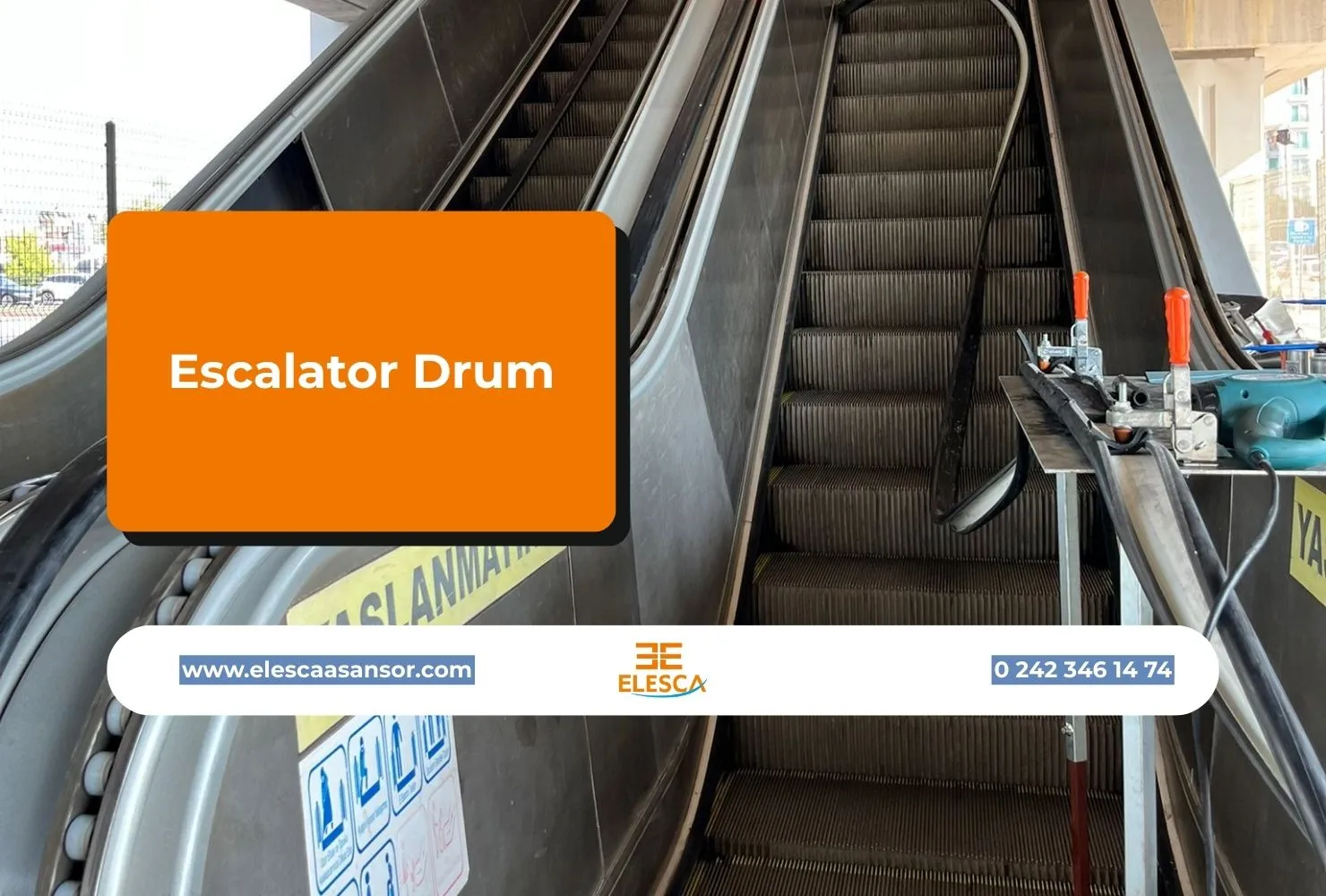
Escalator Drum
Understanding the Escalator Drum Function, Maintenance, and Key Components
The escalator drum is one of the most essential mechanical components responsible for the smooth movement and safe operation of an escalator. Although often overlooked, it plays a crucial role in ensuring operational stability, passenger safety, and long-term equipment durability. As modern buildings increasingly rely on escalators for efficient vertical transportation, understanding the purpose and structure of the escalator drum becomes even more important for facility managers, technicians, and anyone responsible for maintenance.
At Elesca Elevator & Escalator Systems, we supply high-quality escalator spare parts, including escalator handrails, pulleys, step rollers, step chains, comb plates, escalator control panels, steps, C return chains, handrail inlet covers, and step skirtings. With years of experience in domestic and international markets, our Antalya-based company supports businesses with reliable, industry-standard parts backed by trusted solution partners.
This comprehensive guide explores the full function of the escalator drum, its role in escalator mechanics, common issues, maintenance recommendations, compatible parts, and the benefits of investing in high-quality components.
What Is an Escalator Drum?
In escalator mechanics, the escalator drum refers to the cylindrical rotating structure responsible for driving the escalator steps. Positioned at the upper or lower landing section, the drum rotates continuously, pulling the step chain and enabling the smooth movement of each step along the escalator track system.
The escalator drum works in coordination with several other essential parts, including:
- Step chain
- Pulley
- Step roller
- Escalator control panel
- Comb plate
- C return chain
Together, these components ensure that the escalator maintains a consistent speed, proper alignment, and safe passenger flow.
Main Functions of the Escalator Drum
The escalator drum is engineered to deliver several critical operational functions:
- Drives the Step Chain Mechanism
The primary purpose of the escalator drum is to rotate and pull the step chain, which moves the steps up or down the escalator path. Without a properly functioning drum, the escalator cannot operate safely or efficiently.
- Maintains Step Synchronization
The drum ensures that each step stays synchronized during movement. It prevents step misalignment, which could otherwise pose safety hazards.
- Provides Smooth, Vibration-Free Movement
A high-quality escalator drum reduces mechanical vibrations, protecting other components such as step rollers, pulleys, and step skirtings.
- Protects the Escalator from Overloading
Some escalator systems integrate overload protection within the drum mechanism. This prevents excessive strain on the step chain and motor during peak passenger load.
How the Escalator Drum Works
The operation of the escalator drum follows a precise mechanical process designed to ensure stable, continuous movement.
- Motor Transmission
The escalator’s main drive motor transfers energy to the escalator drum, typically through a gearbox or chain drive. The motor and drum must work in perfect coordination for optimal performance.
- Drum Rotation Moves the Step Chain
As the drum rotates, it pulls the step chain, which in turn moves the steps along a fixed track. Proper tensioning of the chain is essential.
- Step Transition at Landing Platforms
At the top and bottom platforms, the steps flatten out and pass over the comb plate before returning via the C return chain. The drum ensures a seamless transition during this process.
- Integration with Control Electronics
The escalator control panel monitors the drum’s movement, adjusting speed, direction, and safety functions depending on escalator settings.
Components That Work Alongside the Escalator Drum
The escalator drum does not operate alone. Its performance depends on several complementary components.
- Step Chain
The step chain directly interfaces with the drum teeth or surface, making its strength and durability essential for long-term reliability.
- Step Rollers
The step rollers guide each step along the track while absorbing friction and weight loads. A smooth drum rotation ensures minimal stress on the rollers.
- Pulleys
The pulleys help transfer motion and maintain tension within the escalator framework, working harmoniously with the drum rotation.
- Escalator Handrail System
While the handrail operates via its own chain and pulley system, the speed is synchronized with the drum-driven step movement to ensure rider stability.
- Comb Plate
The comb plate provides safe passenger entry and exit. Smooth drum operation ensures a stable step entry into the comb plate region.
- Handrail Inlet Cover
Although not mechanically connected to the drum, the handrail inlet cover supports system safety by preventing object entrapment.
- Step Skirting
The step skirting runs alongside the escalator steps. A properly functioning escalator drum prevents step wobbling, reducing potential friction between the steps and skirting panel.
Why the Escalator Drum Matters for Safety
A well-designed escalator drum contributes significantly to escalator safety. Here’s how:
- Prevents Sudden Movement
A damaged or misaligned drum may cause sudden jerks, which can lead to accidents.
- Ensures Proper Step Alignment
The compensating precision of the escalator drum ensures the steps stay correctly aligned with the comb plate, reducing tripping hazards.
- Reduces Wear on Critical Parts
A smooth drum mechanism helps preserve the lifespan of the step chain, step rollers, and pulleys.
- Maintains Speed Stability
Escalators must maintain a regulated speed. The drum ensures consistent motion, complying with international escalator safety standards.
Common Problems with Escalator Drums
Even high-quality components experience wear over time. Some common issues found in escalator drums include:
- Surface Wear and Deformation
Continuous contact with the step chain can wear down the drum surface, affecting movement consistency.
- Gear Misalignment
If the drum’s gears become misaligned, it may cause vibrations, uneven step movement, or excessive noise.
- Corrosion
Environmental factors—like humidity or poor lubrication—may lead to corrosion, especially in older escalators.
- Bearing Failure
The drum rotates on large bearings. When these fail, the entire system becomes unstable.
- Chain Slippage
Improper tension in the step chain may cause slipping on the drum surface.
- Excessive Noise
Grinding, knocking, or humming noises often indicate mechanical problems related to the drum or its connection points.
Maintenance Tips for Escalator Drums
Proper maintenance significantly extends the lifespan of the escalator drum and related components.
- Regular Lubrication
Lubricate the drum and step chain per manufacturer guidelines to reduce friction and prevent wear.
- Inspect Drum Surface Condition
Check for cracks, dents, or surface wear patterns.
- Monitor Chain Tension
Loose or overly tight step chains can damage the drum and escalator system.
- Listen for Unusual Sounds
Noise is an early warning sign of drum or bearing issues.
- Check Alignment
Misalignment leads to uneven wear on steps, rollers, and pulleys.
- Replace Worn Components Promptly
Early replacement of step rollers, step chains, and pulleys prevents further damage to the escalator drum.
When Should the Escalator Drum Be Replaced?
Replacement is typically necessary when the drum shows signs of severe damage or cannot maintain proper step synchronization. Warning indicators include:
- Irregular step movement
- Excessive vibrations
- Visible cracks or deformation
- Frequent chain slippage
- Loud mechanical noises
If any of these signs appear, a professional inspection is recommended.
Why Choose High-Quality Escalator Drums?
A premium-grade escalator drum ensures:
- Longer escalator lifespan
- Lower maintenance costs
- Increased safety
- Better energy efficiency
- Improved passenger comfort
At Elesca Elevator & Escalator Systems, we supply industry-leading escalator components designed for durability and long-term performance.
Applications of Escalator Drums in Modern Escalator Systems
The escalator drum is used across several types of escalators, including:
- Commercial escalators
- Public transportation escalators
- Airport escalators
- Shopping mall escalators
- Heavy-duty industrial escalators
Each system may require different drum dimensions, material strength, and mechanical specifications.
How Elesca Elevator & Escalator Systems Supports You
Based in Antalya, Elesca Elevator & Escalator Systems provides top-quality escalator and elevator spare parts to both domestic and international partners. We work with trusted suppliers and leading brands to deliver components such as:
- Escalator drum
- Escalator handrail
- Pulley
- Step roller
- Step chain
- Comb plate
- Escalator control panel
- C return chain
- Handrail inlet cover
- Step skirting
Our commitment is to offer durable solutions that ensure safety, performance, and long-term value for all types of escalator systems.
Elesca Elevator & Escalator Systems
Phone: +90 242 346 14 74
Location: Antalya, Türkiye
The escalator drum is a vital component that drives the movement and synchronization of escalator steps. Its precision, durability, and smooth operation are essential for safe and efficient escalator performance. Regular maintenance, timely replacement, and the use of high-quality parts ensure that escalators run reliably for years.
At Elesca Elevator & Escalator Systems, we provide a full range of escalator and elevator spare parts designed to support the high operational demands of the industry. Whether you need a new escalator drum, step chain, control panel, or other related components, our team is ready to assist you with the right solutions.


