
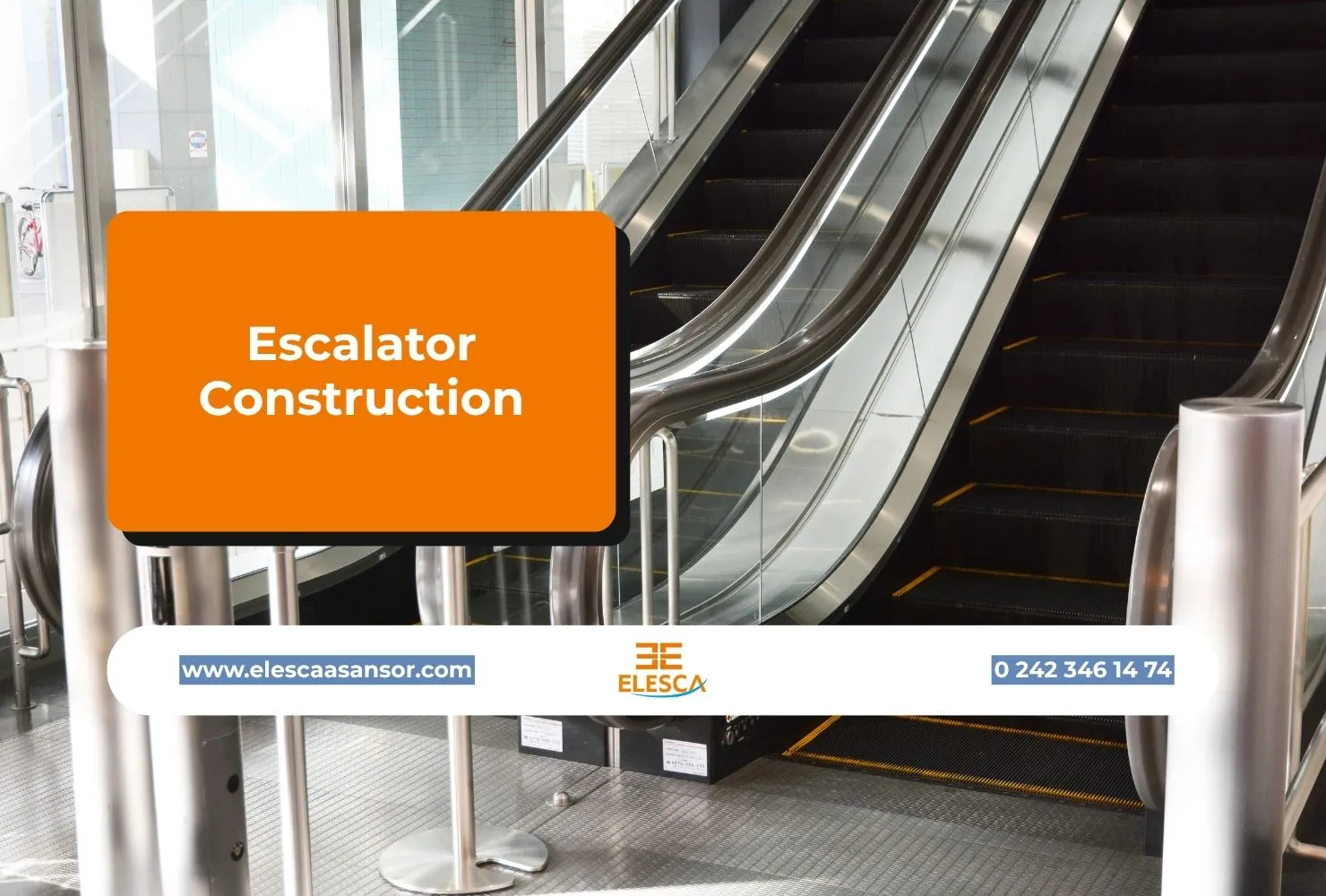
Escalator Construction
Escalator Construction Key Components, Process, and Spare Parts for Reliable Systems
Escalator construction is the process of designing, assembling, installing, and maintaining a moving stairway system that safely transports passengers between different building levels. From shopping malls and airports to metro stations, hotels, hospitals, and commercial complexes, escalators are essential for managing continuous pedestrian traffic. A successful escalator project depends not only on the main structure but also on high-quality spare parts such as the escalator handrail, pulley, step roller, step chain, comb plate, control panel, step, C return chain, handrail inlet cover, and step skirting. Elesca Elevator & Escalator Systems, based in Antalya, supplies elevator, moving walk, and escalator spare parts to domestic and international markets. Working with leading industry brands and expert solution partners, Elesca provides reliable parts and service support for modern escalator systems.
What Is Escalator Construction?
Escalator construction refers to the complete technical process of creating an escalator system, from planning and engineering to mechanical assembly, electrical integration, testing, and long-term maintenance. It includes the structural frame, drive system, steps, chains, handrails, safety devices, control panel, and finishing components. In simple terms, an escalator is a continuous moving staircase. However, behind this simple appearance is a complex system of mechanical, electrical, and safety components working together. Proper escalator construction ensures smooth movement, passenger safety, energy efficiency, long service life, and compliance with building requirements. A well-built escalator must be strong enough to carry heavy daily traffic, precise enough to operate without vibration or imbalance, and safe enough to protect passengers in all operating conditions.
Why Escalator Construction Matters in Modern Buildings
In high-traffic buildings, escalators are more than convenience equipment. They are part of the building’s movement strategy. Poorly planned escalator construction can cause passenger congestion, frequent breakdowns, safety risks, high maintenance costs, and reduced building efficiency. A properly constructed escalator helps buildings: Improve vertical transportation capacity Reduce waiting time between floors Support continuous passenger flow Increase accessibility in commercial spaces Improve the user experience Reduce operational problems Support long-term equipment performance For example, in a shopping mall, escalators influence how visitors move between floors and how easily they access shops. In airports and metro stations, escalators are critical for managing large groups of passengers quickly and safely.
Main Parts Used in Escalator Construction
The performance of escalator construction depends heavily on the quality and compatibility of each component. Even a small part can affect the entire system if it is poorly selected or incorrectly installed.
Escalator Handrail
The escalator handrail moves together with the steps and provides support for passengers. During escalator construction, the handrail must be aligned correctly with the step movement to prevent speed differences, slipping, or passenger discomfort. A high-quality escalator handrail should offer: Smooth movement Strong grip Resistance to wear Flexible structure Long service life Compatibility with the escalator model Elesca Elevator & Escalator Systems supplies escalator handrails for various systems, helping maintenance teams and project managers keep escalators safe and comfortable for passengers.
Pulley
The pulley is an important movement component in escalator construction. It supports the movement of chains, belts, or handrail systems depending on the escalator design. A worn or low-quality pulley can cause noise, vibration, uneven movement, and increased stress on other parts. Correct pulley selection helps maintain stable operation and reduces unnecessary strain on the drive system.
Step Roller
The step roller allows the escalator steps to move smoothly along the track. In escalator construction, step rollers must be durable, correctly sized, and compatible with the escalator track system. Good step rollers help reduce: Noise Vibration Friction Step instability Wear on guide rails Maintenance frequency When step rollers are worn, passengers may feel shaking or irregular movement. For this reason, they are among the most important replacement parts in escalator maintenance.
Step Chain
The step chain connects and moves the escalator steps in a continuous loop. It is one of the most critical components in escalator construction because it directly controls the movement of the steps. A reliable step chain must provide: High tensile strength Precise movement Resistance to elongation Long-term durability Compatibility with the drive system If a step chain stretches or wears unevenly, the escalator may produce noise, lose alignment, or become unsafe. Regular inspection and timely replacement are essential.
Comb Plate
The comb plate is located at the entrance and exit points of the escalator. It helps guide passengers safely onto and off the moving steps. In escalator construction, the comb plate is a key safety component because it reduces the risk of objects, shoes, or debris getting trapped between the moving steps and landing area. A comb plate must be strong, accurately fitted, and regularly inspected. Damaged comb teeth should be replaced immediately to protect passengers and maintain safe operation.
Escalator Control Panel
The escalator control panel manages the electrical and operational functions of the system. It controls starting, stopping, speed, safety sensors, fault detection, and emergency functions. In modern escalator construction, the control panel is central to system intelligence. A well-designed control panel improves safety, energy efficiency, and fault monitoring. It also allows maintenance teams to identify problems more quickly.
Escalator Step
The escalator step is the visible moving platform passengers stand on. Steps are usually made from strong metal materials and designed with grooves for grip and safety. During escalator construction, each step must be installed with accurate spacing, correct alignment, and proper engagement with the step chain and rollers. A damaged or misaligned step can create serious safety risks.
C Return Chain
The C return chain supports the return movement of components within the escalator system. In escalator construction, return chain quality affects smooth circulation and operational stability. Reliable C return chains help maintain continuous movement and reduce mechanical stress during operation.
Handrail Inlet Cover
The handrail inlet cover protects the area where the handrail enters the balustrade. It is an important safety and finishing component in escalator construction. This cover helps prevent fingers, clothing, or objects from entering the handrail opening. A properly fitted handrail inlet cover improves passenger safety and gives the escalator a clean, professional appearance.
Step Skirting
Step skirting is installed along the sides of the escalator steps. In escalator construction, skirting helps reduce the gap between the moving steps and side panels. This area must be carefully designed and maintained because it is one of the most important passenger safety zones. High-quality step skirting supports smoother movement and reduces the risk of side contact or trapping.
Escalator Construction Process Step by Step
Every project has different technical requirements, but the main stages of escalator construction usually follow a structured process.
1. Site Planning and Traffic Analysis
Before installation begins, engineers evaluate the building layout, expected passenger traffic, floor height, available space, and usage purpose. This stage determines the escalator type, width, speed, inclination, and capacity. For example, an escalator in a metro station requires a higher-duty design than an escalator in a small commercial building. Correct planning ensures the system can handle daily demand without excessive wear.
2. Structural Design
The structural design stage includes the escalator truss, support points, landing areas, and integration with the building structure. The truss is the main frame that carries the mechanical system. Strong structural design is essential in escalator construction because the escalator must support passengers, moving parts, dynamic loads, and long-term operational stress.
3. Mechanical Component Selection
After the structure is planned, the correct mechanical components are selected. These include steps, chains, rollers, pulleys, handrails, comb plates, return chains, and related spare parts. Choosing compatible components is one of the most important factors in escalator construction. Parts must match the escalator model, operating conditions, traffic level, and safety requirements.
4. Electrical and Control System Integration
The control system connects the motor, sensors, switches, emergency stops, lighting, and safety devices. The escalator control panel must be installed and programmed correctly to ensure safe operation. Modern control systems may include energy-saving modes, fault codes, automatic stop functions, and monitoring options. These features improve both safety and maintenance efficiency.
5. Installation of Steps, Chains, and Rollers
During this phase, the step chain, steps, step rollers, and guide systems are assembled. The alignment must be precise because even small errors can cause vibration, noise, and premature wear. In professional escalator construction, technicians carefully check chain tension, step spacing, roller movement, and track alignment.
6. Handrail and Balustrade Assembly
The escalator handrail, handrail guides, inlet covers, and balustrade panels are installed. The handrail must move at the same speed as the steps to provide passenger stability. Handrail movement should be smooth, consistent, and free from slipping. The handrail inlet cover must also be securely fitted for passenger protection.
7. Safety Component Installation
Safety devices are essential in escalator construction. These may include emergency stop buttons, comb plate safety switches, step sag detection, speed monitoring, handrail entry protection, and skirt safety systems. The purpose of these components is to stop the escalator when abnormal conditions are detected.
8. Testing and Commissioning
Before the escalator is opened for public use, the system must be tested carefully. Technicians check movement, speed, braking, noise level, vibration, safety switches, handrail synchronization, step alignment, and control panel response. Only after successful testing should the escalator be placed into service.
Important Design Factors in Escalator Construction
Passenger Capacity
Passenger capacity depends on step width, speed, and traffic flow. A narrow escalator may be suitable for low-traffic areas, while wider escalators are preferred in malls, airports, and stations.
Inclination Angle
Escalators are commonly designed with inclination angles such as 30 or 35 degrees, depending on the building layout and application. The angle affects comfort, space use, and safety.
Step Width
Step width influences passenger comfort and traffic capacity. Wider steps allow more comfortable movement, especially in public buildings.
Operating Environment
Indoor and outdoor escalators require different materials and protection levels. Outdoor systems need stronger resistance against moisture, dust, temperature changes, and corrosion.
Maintenance Access
Good escalator construction includes easy access for inspection, cleaning, lubrication, and part replacement. Maintenance-friendly design reduces downtime and service costs.
Common Problems Caused by Poor Escalator Construction
When escalator construction is not carried out correctly, the system may develop mechanical, electrical, or safety problems over time. Common issues include: Excessive vibration Unusual operating noise Handrail speed mismatch Step chain elongation Roller wear Comb plate damage Control panel faults Step misalignment Frequent shutdowns Increased energy consumption Many of these problems can be prevented with correct engineering, high-quality spare parts, and regular maintenance.
Role of Spare Parts in Escalator Construction and Maintenance
Spare parts are not only important during installation; they are also essential for long-term performance. Even the best escalator system requires replacement parts after years of operation. Elesca Elevator & Escalator Systems supplies key escalator spare parts such as: Escalator Handrail Pulley Step Roller Step Chain Comb Plate Escalator Control Panel Step C Return Chain Handrail Inlet Cover Step Skirting Using reliable spare parts helps extend equipment life, improve passenger safety, reduce breakdowns, and maintain smooth operation.
Escalator Construction for Commercial Buildings
Commercial buildings need escalators that can support customer movement throughout the day. In shopping malls, hotels, business centers, and retail stores, escalator construction should focus on durability, appearance, passenger comfort, and operational continuity. A breakdown in a commercial building can affect customer satisfaction and business flow. For this reason, durable parts and regular servicing are essential.
Escalator Construction for Public Transportation Areas
Metro stations, airports, bus terminals, and public transit centers require heavy-duty escalator systems. These environments often operate for long hours and carry thousands of passengers daily. In these projects, escalator construction must prioritize: High load capacity Strong step chains Durable step rollers Reliable control panels Advanced safety systems Easy maintenance access Long service life Public transportation escalators must be built for continuous use and rapid maintenance response.
Escalator Construction for International Projects
International projects require careful attention to product compatibility, quality standards, logistics, and technical support. Elesca Elevator & Escalator Systems supplies high-quality escalator spare parts to both domestic and international markets, supporting companies that need reliable components for installation, modernization, and maintenance. Based in Antalya, Elesca works with leading industry brands and expert solution partners to deliver dependable products and services to customers in different markets.
How to Choose Parts for Escalator Construction
Selecting the right parts is one of the most important steps in escalator construction. Before purchasing components, project managers and maintenance teams should consider: Escalator brand and model Technical dimensions Load capacity Material quality Operating environment Traffic density Safety requirements Compatibility with existing parts Supplier reliability After-sales support Working with a professional supplier helps reduce the risk of incorrect parts, installation delays, and early component failure.
Maintenance After Escalator Construction
After installation, regular maintenance protects the investment and keeps the escalator safe. Maintenance should include mechanical inspection, lubrication, cleaning, safety testing, control panel checks, and replacement of worn parts. Important maintenance points include: Checking step chain tension Inspecting step rollers Testing emergency stop buttons Examining comb plates Checking handrail movement Inspecting step skirting Cleaning debris from landing areas Monitoring unusual noise or vibration Reviewing control panel fault records A good maintenance plan reduces breakdowns and supports long-term escalator reliability.
Why Choose Elesca Elevator & Escalator Systems?
Elesca Elevator & Escalator Systems is based in Antalya and supplies elevator, moving walk, and escalator spare parts to domestic and international markets. The company works with leading industry brands and expert solution partners to provide high-quality products and dependable service. For escalator construction, modernization, repair, and maintenance projects, Elesca offers essential spare parts including escalator handrails, pulleys, step rollers, step chains, comb plates, escalator control panels, steps, C return chains, handrail inlet covers, and step skirting. For product information and support, you can contact Elesca Elevator & Escalator Systems at +90 242 346 14 74.
Frequently Asked Questions About Escalator Construction
What is escalator construction?
Escalator construction is the process of designing, assembling, installing, testing, and maintaining an escalator system. It includes the structural frame, steps, chains, rollers, handrails, control panel, safety devices, and finishing components.
What are the main components used in escalator construction?
The main components include the escalator handrail, pulley, step roller, step chain, comb plate, escalator control panel, step, C return chain, handrail inlet cover, and step skirting.
Why is the step chain important in escalator construction?
The step chain moves the escalator steps in a continuous cycle. A strong and compatible step chain is essential for smooth movement, passenger safety, and long-term system reliability.
How does the escalator control panel work?
The escalator control panel manages the motor, sensors, safety devices, speed control, emergency functions, and fault detection. It is the main electrical control center of the escalator.
What causes escalator vibration?
Escalator vibration can be caused by worn step rollers, poor chain tension, misaligned steps, damaged pulleys, track issues, or incorrect installation. Proper escalator construction and maintenance help prevent these problems.
When should escalator spare parts be replaced?
Spare parts should be replaced when they show signs of wear, damage, deformation, noise, vibration, or reduced performance. Critical parts such as step chains, rollers, comb plates, and handrails should be inspected regularly.
Can escalator construction affect maintenance costs?
Yes. High-quality escalator construction reduces maintenance costs by ensuring proper alignment, durable components, safe operation, and easier access for service teams.
Who supplies escalator spare parts for construction and maintenance?
Elesca Elevator & Escalator Systems supplies escalator spare parts including escalator handrails, pulleys, step rollers, step chains, comb plates, control panels, steps, C return chains, handrail inlet covers, and step skirting.
Escalator construction is a detailed engineering process that combines structural strength, mechanical precision, electrical control, and passenger safety. Every component, from the step chain and step roller to the handrail, comb plate, control panel, and step skirting, plays an important role in system performance. For long-lasting and reliable escalator systems, choosing high-quality spare parts is essential. Elesca Elevator & Escalator Systems, based in Antalya, supplies elevator, moving walk, and escalator spare parts to domestic and international markets. With strong product quality and experienced solution partners, Elesca supports projects that require safe, efficient, and durable escalator systems. For escalator spare parts and project support, contact Elesca Elevator & Escalator Systems at +90 242 346 14 74.


