
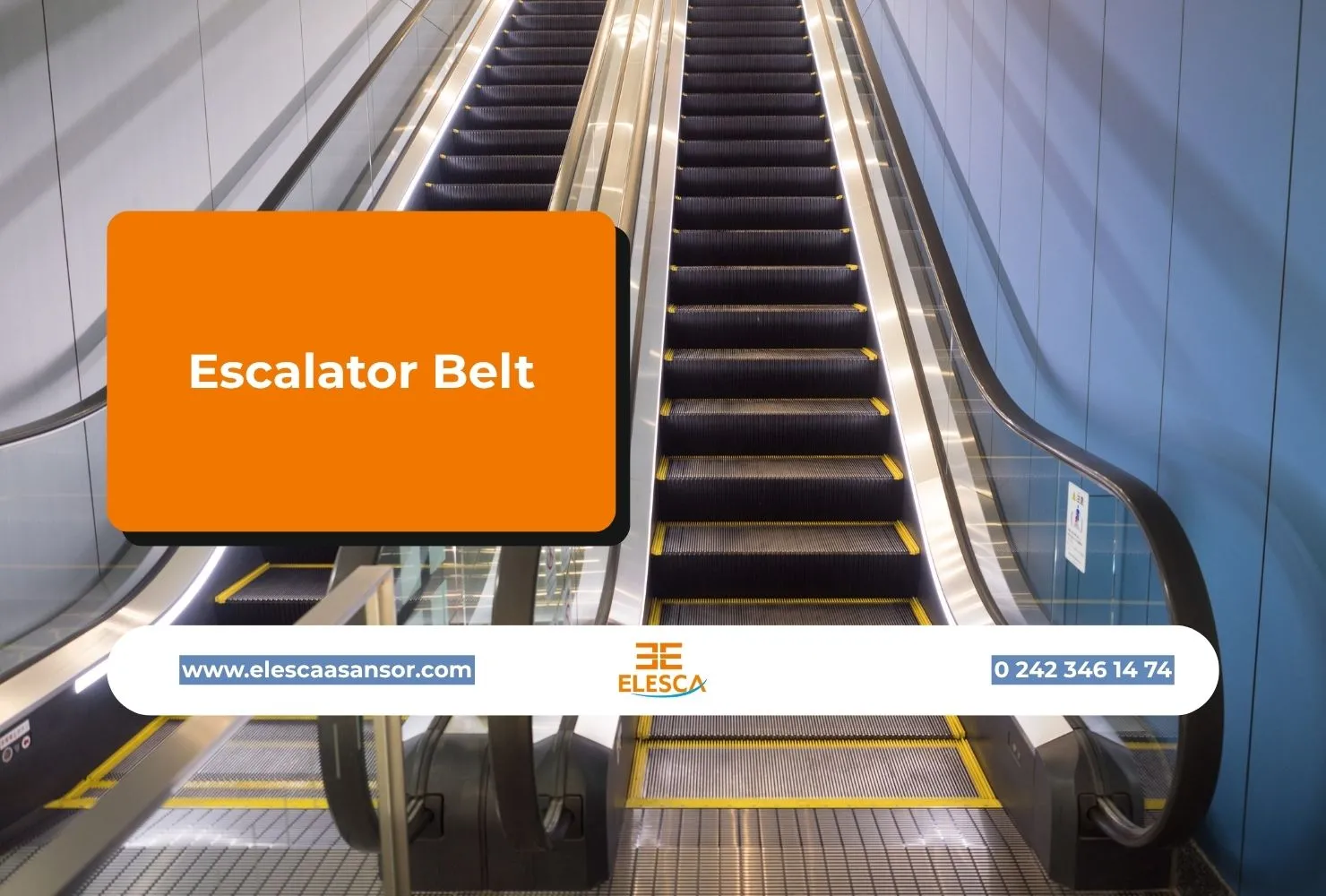
Escalator Belt
Escalator Belt A Complete Guide for Reliable Escalator Movement and Passenger Safety
An Escalator belt is one of the most important parts of an escalator system because it supports smooth movement, passenger safety, and long-term operating performance. In many technical and commercial searches, the term Escalator belt can refer to the escalator handrail belt, the moving rubber handrail, or belt-related drive components used in escalator and moving walk systems. For building owners, maintenance companies, facility managers, and spare parts buyers, choosing the right Escalator belt is essential for reducing downtime and keeping passenger transportation systems working safely. Elesca Elevator & Escalator Systems supplies high-quality elevator, moving walk, and escalator spare parts from Antalya, Türkiye. With products supplied to both domestic and international markets, Elesca supports customers with escalator handrails, pulleys, step rollers, step chains, comb plates, escalator control panels, steps, C return chains, handrail inlet covers, and step skirting. For professional support and product information, customers can contact Elesca Elevator & Escalator Systems at +90 242 346 14 74.
What Is an Escalator Belt?
An Escalator belt is commonly understood as the moving handrail belt that travels along the balustrade of an escalator at the same speed as the steps. It gives passengers a stable gripping surface while they ride the escalator. In some cases, the term may also be used to describe belt-driven components within the escalator drive or handrail drive system. A high-quality Escalator belt must be flexible, durable, wear-resistant, and compatible with the escalator model. It should move smoothly without slipping, cracking, vibration, or excessive noise. Since passengers touch the belt directly, surface quality and grip comfort are also important.
Quick Answer: What does an escalator belt do?
An Escalator belt helps passengers maintain balance by providing a moving handrail that travels in coordination with the escalator steps. It also supports safe passenger flow in malls, airports, metro stations, hotels, hospitals, commercial buildings, and public transport facilities.
Why the Escalator Belt Is Important
The Escalator belt is not only a comfort component. It is directly connected to safety, user confidence, and system reliability. When passengers step onto an escalator, they usually hold the handrail naturally. If the belt is moving too slowly, too quickly, or unevenly, passengers may lose balance. A properly selected and maintained Escalator belt helps provide: Stable passenger support Smooth synchronized movement Reduced slip risk Better user comfort Lower maintenance issues Longer escalator service life Improved professional appearance In busy areas, such as shopping centers or transport hubs, an Escalator belt may operate for many hours every day. Poor-quality belts can wear quickly, while high-quality belts help reduce replacement frequency and maintenance costs.
Main Components Related to the Escalator Belt
An Escalator belt works together with several other escalator parts. If one part is worn or misaligned, the belt may not perform correctly. That is why spare parts should be selected as part of a complete system approach.
Escalator Handrail
The escalator handrail is the most common meaning of Escalator belt. It is usually made from rubber or synthetic materials and reinforced internally for strength. It must follow the escalator curve, return path, and drive system smoothly.
Pulley
The pulley supports belt movement and helps guide the Escalator belt along the correct path. A worn pulley may cause noise, vibration, uneven movement, or belt damage.
Step Roller
Step rollers support the movement of escalator steps. Although they do not directly form the Escalator belt, they are part of the overall escalator movement system. If step rollers are worn, the escalator may vibrate, affecting the user experience.
Step Chain
The step chain moves the escalator steps. Correct coordination between the step chain and Escalator belt speed is important for passenger safety.
Comb Plate
The comb plate is located at the entrance and exit of the escalator. It helps guide passengers safely on and off the escalator. A well-maintained comb plate supports the safe use of the full escalator system.
Escalator Control Panel
The escalator control panel manages operation, safety sensors, and system functions. If the Escalator belt speed or movement is affected by the drive system, control panel diagnostics may help identify the issue.
Handrail Inlet Cover
The handrail inlet cover protects the area where the Escalator belt enters the escalator structure. This part is important for preventing foreign objects from entering the system.
Step Skirting
Step skirting supports passenger safety along the sides of the escalator. It works with other components to create a safer passenger transport environment.
Types of Escalator Belt Applications
The term Escalator belt can be used in different ways depending on the technical context. Buyers should confirm the exact part they need before ordering.
Escalator Handrail Belt
This is the most common type. It is the moving belt passengers hold while using the escalator. It must match the escalator model, width, profile, color, and installation requirements.
Moving Walk Handrail Belt
Moving walks also use handrail belts. These belts are similar to escalator handrails but may require different specifications depending on the angle, length, and system design.
Handrail Drive Belt
In some escalator systems, a drive belt helps transfer movement within the handrail drive mechanism. This is different from the passenger handrail but still related to Escalator belt performance.
Endless Escalator Belt
An endless Escalator belt is manufactured or joined as a continuous loop. Proper joining quality is critical because weak joints can cause failure, uneven movement, or safety risks.
How to Choose the Right Escalator Belt
Selecting the correct Escalator belt requires technical accuracy. Even a small mismatch can cause performance problems. Before purchasing, the buyer should check the escalator brand, model, handrail profile, dimensions, operating environment, and system condition. Important selection criteria include: Belt profile and shape Total belt length Width and thickness Material quality Internal reinforcement Color and surface finish Drive compatibility Resistance to wear and temperature Installation requirements Elesca Elevator & Escalator Systems works with leading industry brands and expert solution partners to supply reliable escalator spare parts for domestic and international customers.
Common Signs That an Escalator Belt Needs Replacement
An Escalator belt should be inspected regularly. Since it is exposed to continuous movement, friction, passenger contact, cleaning chemicals, dust, and environmental conditions, wear is expected over time. Common replacement signs include: Cracks on the belt surface Hardening or loss of flexibility Visible cuts or deformation Uneven movement Slipping during operation Noise from the handrail area Speed difference between belt and steps Poor grip surface Damaged or weak belt joint Excessive vibration If an Escalator belt shows these signs, replacement should not be delayed. A damaged handrail belt can reduce passenger confidence and may create safety concerns.
Escalator Belt Maintenance
Proper maintenance helps extend the life of an Escalator belt and protects other escalator components. Maintenance should be performed by qualified technicians according to the escalator manufacturer’s requirements.
Regular Cleaning
The surface of the Escalator belt should be cleaned with suitable products. Harsh chemicals may damage rubber or synthetic surfaces. Clean belts also improve passenger experience.
Tension Control
Incorrect belt tension can cause slipping, noise, or excessive wear. A loose Escalator belt may not move correctly, while an overly tight belt may stress pulleys and drive components.
Alignment Check
The belt should move smoothly along its guide path. Misalignment can cause side wear, friction, and premature failure.
Pulley and Roller Inspection
A new Escalator belt may fail early if installed with worn pulleys, rollers, or guides. Related parts should be inspected before installation.
Speed Synchronization
The handrail belt and escalator steps should move at compatible speeds. A noticeable speed difference may indicate mechanical or control-related issues.
Escalator Belt and Passenger Safety
Passenger safety is the main reason why the Escalator belt must be kept in excellent condition. A stable handrail helps users stand securely, especially children, elderly passengers, and people carrying bags. A reliable Escalator belt supports safe movement by giving passengers a consistent grip. In high-traffic buildings, this becomes even more important because thousands of users may rely on the escalator every day. Safety-focused escalator maintenance should also include comb plates, step chains, step rollers, handrail inlet covers, skirting, and control panels. An escalator is a complete system, and the Escalator belt is only one part of that system.
Escalator Belt Materials and Quality Features
A high-quality Escalator belt is usually produced from durable rubber or advanced synthetic compounds. It may include internal layers that improve strength, flexibility, and dimensional stability. Quality features to look for include: Strong internal reinforcement Smooth surface finish Good flexibility Resistance to cracking Resistance to abrasion Stable movement under load Long service life Reliable joint quality Compatibility with escalator guides and drive systems Low-quality belts may look acceptable at first but can wear quickly, stretch, crack, or create noise. For commercial facilities, investing in a reliable Escalator belt can reduce long-term costs.
Escalator Belt Replacement Process
Replacing an Escalator belt requires technical skill. The escalator must be safely stopped, inspected, and prepared for installation. Technicians should confirm the belt specification before removing the old part. A typical replacement process may include: System shutdown and safety preparation Inspection of old belt condition Removal of damaged or worn belt Inspection of pulleys, guides, and drive components Installation of the new Escalator belt Tension and alignment adjustment Movement and speed testing Final safety check After replacement, the escalator should be tested carefully before being returned to public use.
Escalator Belt Problems and Possible Causes
Understanding common Escalator belt problems helps maintenance teams detect issues early.
Escalator belt slipping
Slipping may be caused by incorrect tension, worn drive components, contaminated surfaces, or pulley problems.
Escalator belt cracking
Cracking can occur due to age, poor material quality, exposure to sunlight, unsuitable cleaning chemicals, or excessive friction.
Escalator belt moving unevenly
Uneven movement may be related to alignment problems, guide wear, pulley damage, or drive system issues.
Escalator belt making noise
Noise can come from dry guides, worn pulleys, poor alignment, excessive tension, or internal belt damage.
Escalator belt speed mismatch
If the Escalator belt does not move at the correct speed compared with the steps, the handrail drive system, step chain, or control settings may need inspection.
Why Choose Elesca Elevator & Escalator Systems?
Elesca Elevator & Escalator Systems is based in Antalya and supplies elevator, moving walk, and escalator spare parts to both domestic and international markets. The company works with leading industry brands and expert solution partners to deliver high-quality products and services. For customers searching for an Escalator belt, Elesca can support spare part needs along with related escalator components such as: Escalator Handrail Pulley Step Roller Step Chain Comb Plate Escalator Control Panel Step C Return Chain Handrail Inlet Cover Step Skirting This wide product range helps customers source multiple escalator spare parts from one reliable supplier. For product support, pricing, and compatibility information, contact Elesca Elevator & Escalator Systems at +90 242 346 14 74.
Industries That Need Escalator Belt Spare Parts
An Escalator belt is used in many buildings and public areas where continuous passenger movement is required. Common application areas include: Shopping malls Airports Metro and railway stations Hotels Hospitals Office buildings Public institutions Business centers Residential complexes Exhibition centers Retail stores Moving walk systems In these locations, escalator downtime can affect customer flow, safety, and building operations. Keeping spare parts such as Escalator belt, step rollers, step chains, comb plates, and handrail inlet covers available can reduce service interruptions.
Escalator Belt Buying Checklist
Before ordering an Escalator belt, buyers should prepare technical details to avoid incorrect product selection.
What information is needed before buying an escalator belt?
The most important details are escalator brand, model, handrail profile, belt length, belt color, installation environment, and any visible part codes or technical references. Photos of the existing Escalator belt can also help identify the correct product. A practical checklist includes: Escalator brand and model Existing belt measurements Handrail profile type Required belt color Indoor or outdoor use Quantity needed Urgency of delivery Related worn parts Maintenance history Installation support requirements Providing accurate information helps Elesca Elevator & Escalator Systems recommend the right spare part solution.
Escalator Belt vs Escalator Handrail: Are They the Same?
In many cases, Escalator belt and escalator handrail refer to the same visible moving part that passengers hold. However, in technical discussions, “belt” may also refer to internal drive belts. This is why buyers should clarify whether they need the passenger handrail belt or a drive-related belt component. For SEO and search purposes, many users search for Escalator belt when they are looking for an escalator handrail. Suppliers should understand both terms to support international buyers.
How Long Does an Escalator Belt Last?
The service life of an Escalator belt depends on usage intensity, product quality, installation accuracy, maintenance routine, environmental conditions, and cleaning methods. A belt in a low-traffic indoor building may last longer than one in a busy metro station or outdoor facility. Factors that affect belt life include: Daily operating hours Passenger traffic volume Temperature and humidity Cleaning chemicals Sunlight exposure Pulley condition Tension accuracy Guide alignment Quality of installation Regular inspection helps detect early wear and prevents unexpected breakdowns.
Frequently Asked Questions About Escalator Belt
What is an Escalator belt?
An Escalator belt is usually the moving handrail belt that passengers hold while using an escalator. It moves together with the steps and helps passengers maintain balance.
Is an Escalator belt the same as a handrail?
In most commercial searches, yes. The term Escalator belt often refers to the escalator handrail. However, some technical contexts may use the term for internal belt components.
When should an Escalator belt be replaced?
An Escalator belt should be replaced when it shows cracks, slipping, hardening, surface damage, speed mismatch, weak joints, or abnormal noise during operation.
What causes an Escalator belt to slip?
Slipping may be caused by incorrect tension, worn pulleys, poor alignment, contaminated surfaces, or problems in the handrail drive system.
Can Elesca supply Escalator belt spare parts?
Yes. Elesca Elevator & Escalator Systems supplies escalator spare parts, including escalator handrails and related components, to domestic and international markets. You can contact the company at +90 242 346 14 74.
What other escalator parts are related to belt performance?
Pulleys, handrail inlet covers, step chains, step rollers, control panels, guides, comb plates, and skirting can all affect the safe and smooth operation of an Escalator belt.
Professional Escalator Belt Supply from Elesca
Choosing the right Escalator belt is essential for safe, smooth, and reliable escalator operation. A quality belt improves passenger comfort, supports balance, reduces maintenance problems, and helps extend the working life of the escalator system. Elesca Elevator & Escalator Systems provides elevator, moving walk, and escalator spare parts from Antalya to both local and international customers. With a product range that includes escalator handrails, pulleys, step rollers, step chains, comb plates, control panels, steps, C return chains, handrail inlet covers, and step skirting, Elesca offers dependable support for escalator maintenance and spare part supply. For professional assistance with Escalator belt selection and compatible escalator spare parts, contact Elesca Elevator & Escalator Systems at +90 242 346 14 74.


