
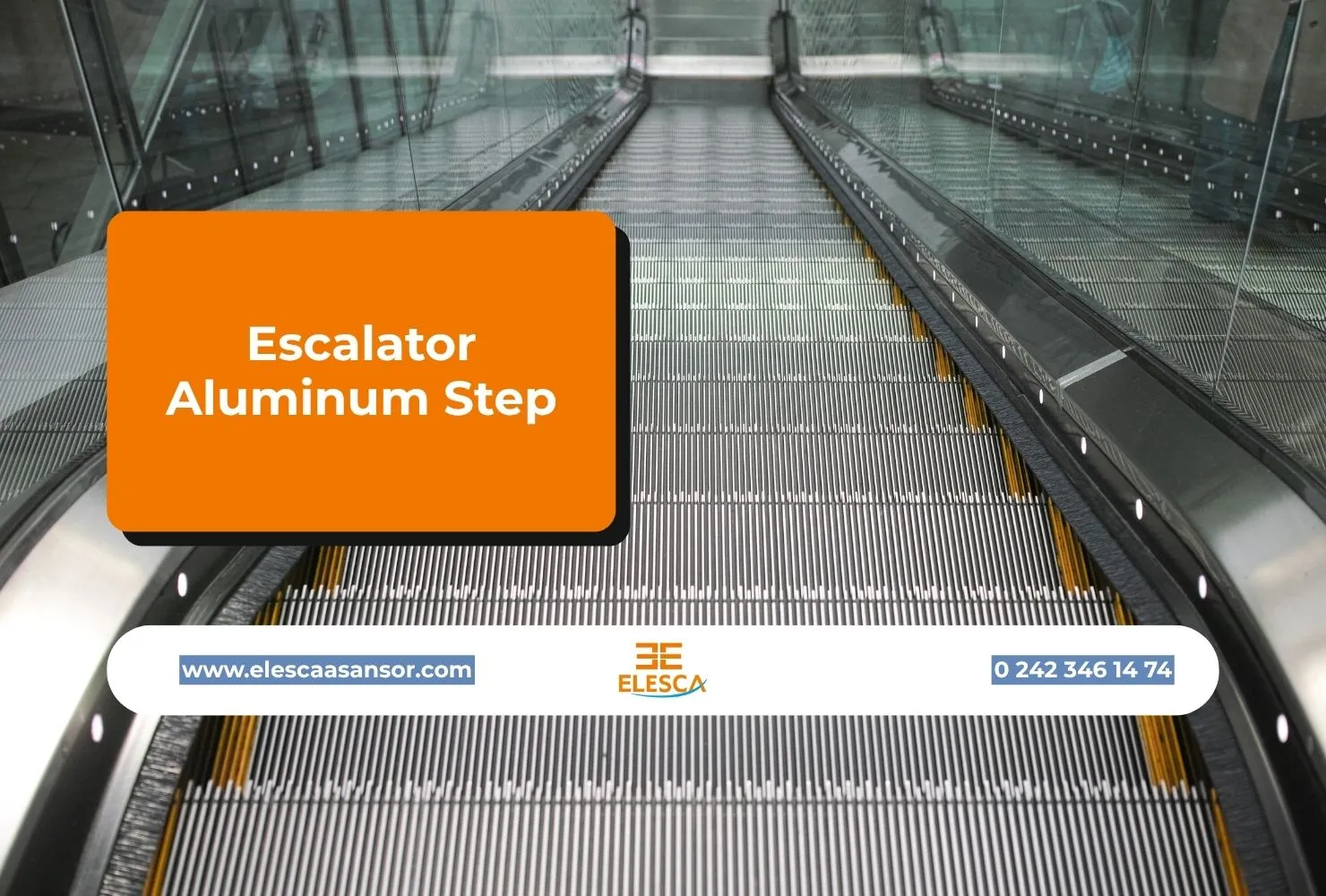
Escalator Aluminum Step
Escalator Aluminum Step Durable Step Solutions for Safe and Reliable Escalator Performance
An Escalator aluminum step is one of the most important moving components in an escalator system. It carries passengers, works continuously under heavy traffic, and must maintain stable movement, strong load capacity, and precise alignment with the step chain, rollers, comb plate, and skirt panels. For shopping malls, airports, metro stations, hotels, business centers, hospitals, and public buildings, choosing the right Escalator aluminum step directly affects passenger safety, system efficiency, maintenance cost, and long-term escalator reliability.
Elesca Elevator & Escalator Systems supplies elevator, moving walk, and escalator spare parts from Antalya to both domestic and international markets. With a product range including Escalator Handrail, Pulley, Step Roller, Step Chain, Comb Plate, Escalator Control Panel, Step, C Return Chain, Handrail Inlet Cover, and Step Skirting, Elesca Elevator & Escalator Systems provides high-quality spare part solutions for professional maintenance companies, project contractors, and technical service providers.
For product information and spare part support, you can contact Elesca Elevator & Escalator Systems at +90 242 346 14 74.
What Is an Escalator Aluminum Step?
An Escalator aluminum step is the tread component that forms the visible walking surface of an escalator. It is usually produced from aluminum alloy because aluminum provides an effective balance between strength, weight, corrosion resistance, and dimensional stability. Each step moves in a continuous loop together with the step chain and step rollers, creating a smooth passenger transport surface.
The main function of an Escalator aluminum step is to carry passenger loads safely while maintaining accurate engagement with the comb plate at the landing areas. The grooves on the step surface are designed to align with the comb teeth, helping reduce the risk of objects being trapped at the entrance and exit points of the escalator.
A quality Escalator aluminum step must be compatible with the escalator model, step width, chain system, roller arrangement, guide rail structure, and comb plate design. Even small differences in dimensions can cause noise, vibration, uneven movement, increased wear, or safety risks.
Why Aluminum Is Used in Escalator Steps
Aluminum is widely preferred for escalator steps because it delivers durability without adding excessive weight to the system. A lighter step reduces mechanical load on the step chain, motor, pulleys, rollers, and drive components. At the same time, aluminum is strong enough to withstand repeated passenger traffic in commercial and public environments.
A properly manufactured Escalator aluminum step offers several advantages:
It provides strong load-bearing capacity for daily passenger use.
It resists corrosion better than many standard metal alternatives.
It supports precise casting or forming for accurate dimensions.
It helps reduce unnecessary weight in the moving step band.
It offers a clean and professional appearance for modern escalator systems.
It maintains stable performance when matched with correct rollers and chains.
Because escalators operate for long hours, every moving part must work with minimum friction and maximum stability. The Escalator aluminum step plays a central role in this process by combining structural strength with smooth movement.
Key Features of a Quality Escalator Aluminum Step
A high-quality Escalator aluminum step should not only look suitable from the outside. It must meet technical expectations in terms of geometry, surface finish, strength, compatibility, and operational safety. Maintenance professionals should evaluate several important features before selecting a replacement step.
Accurate Dimensions
Step dimensions must match the original escalator system. Width, depth, height, groove pitch, axle connection points, roller mounting areas, and chain connection design must be correct. Incorrect dimensions can cause poor alignment with the comb plate or step skirting.
Strong Tread Surface
The tread surface of an Escalator aluminum step must resist wear, deformation, and cracking. It should maintain grip and stability for passengers, especially in high-traffic areas where thousands of people may use the escalator each day.
Comb Plate Compatibility
The grooves on the step must align accurately with the comb plate teeth. If the comb plate and step grooves do not match, the escalator may create noise, friction, or dangerous gaps at landing areas.
Stable Roller Connection
The step must work properly with the Step Roller and guide system. A weak or inaccurate roller connection can lead to vibration, irregular movement, or premature roller wear.
Reliable Chain Engagement
The Step Chain moves the step band in a controlled path. A compatible Escalator aluminum step must connect correctly to the chain structure so the escalator can operate smoothly.
Surface Quality
A clean, uniform surface reduces the risk of dirt accumulation, uneven wear, and passenger discomfort. Good surface quality also improves the visual appearance of the escalator.
Escalator Aluminum Step and Passenger Safety
Passenger safety is the main reason why the quality of an Escalator aluminum step matters. Escalators are used by people of all ages, including children, elderly passengers, and people carrying bags or luggage. The step surface must remain stable, secure, and properly aligned during operation.
A damaged, cracked, bent, or incompatible Escalator aluminum step can create several risks. These may include unstable footing, increased vibration, unusual noise, poor comb plate engagement, and greater wear on surrounding components. In serious cases, step failure can cause escalator shutdown or passenger injury.
Regular inspection of escalator steps should include checking for cracks, broken edges, worn grooves, loose roller connections, corrosion, deformation, and abnormal movement. If a problem is detected, the step should be replaced with a compatible spare part before the issue affects other components.
Elesca Elevator & Escalator Systems supports professional maintenance teams by supplying compatible escalator spare parts that help preserve safe and reliable system performance.
Where Escalator Aluminum Steps Are Commonly Used
An Escalator aluminum step is commonly used in commercial, industrial, public, and transportation environments. These locations require durable components because escalators often operate for long periods with high passenger flow.
Common application areas include:
Shopping malls
Airports
Metro and railway stations
Hotels
Hospitals
Office buildings
Business centers
Universities
Public institutions
Exhibition centers
Retail stores
Underground passages
Moving walk and escalator transition systems
In high-traffic locations, the durability of the Escalator aluminum step becomes even more important. Frequent passenger use increases mechanical stress on the step, Step Roller, Step Chain, Pulley, Comb Plate, and Step Skirting. Using reliable spare parts helps reduce downtime and maintenance frequency.
Escalator Aluminum Step Replacement: When Is It Necessary?
Replacing an Escalator aluminum step becomes necessary when the step can no longer perform safely or efficiently. In some cases, visual damage is obvious. In other cases, the problem may appear as noise, vibration, misalignment, or irregular movement.
Common signs that an Escalator aluminum step may need replacement include:
Visible cracks on the tread or riser area
Broken or damaged step edges
Worn grooves on the walking surface
Poor alignment with the comb plate
Unusual noise during escalator operation
Excessive vibration while the step is moving
Loose or damaged roller connection points
Bent or deformed aluminum structure
Signs of impact damage
Repeated jamming near the landing area
Uneven step movement in the step band
If one damaged step is ignored, it can create additional stress on the Step Chain, Step Roller, Comb Plate, and guide rail system. For this reason, timely replacement helps prevent larger repair costs.
How to Choose the Right Escalator Aluminum Step
Selecting the right Escalator aluminum step requires technical accuracy. A step should never be chosen only by visual similarity. Maintenance companies and spare part buyers should confirm compatibility with the escalator brand, model, step width, chain pitch, roller type, and installation structure.
Important selection criteria include:
Escalator brand and model compatibility
Step width and tread dimensions
Groove design and pitch
Roller mounting details
Step chain connection type
Comb plate compatibility
Material quality
Load-bearing capacity
Surface finish
Installation requirements
Operational environment
Expected passenger traffic level
Elesca Elevator & Escalator Systems works with leading industry brands and expert solution partners to provide suitable spare part solutions for different escalator systems. This helps customers find the correct Escalator aluminum step and related components for maintenance, repair, and replacement needs.
Escalator Aluminum Step and Related Components
An Escalator aluminum step does not work alone. It is part of a complete mechanical system. For reliable operation, the step must work in harmony with other escalator parts.
Step Roller
The Step Roller supports smooth step movement along the track system. If the roller is worn or damaged, the Escalator aluminum step may move unevenly, create noise, or cause vibration.
Step Chain
The Step Chain connects and moves the steps in a continuous loop. Proper engagement between the chain and the step is essential for safe operation.
Comb Plate
The Comb Plate is located at the entrance and exit of the escalator. Its teeth align with the grooves of the Escalator aluminum step to create a safer transition area for passengers.
Step Skirting
Step Skirting is positioned along the side of the step path. Correct spacing between the step and skirting helps reduce friction and improves passenger safety.
Pulley
Pulley components support the movement of belts, chains, or drive-related systems depending on escalator design. A properly operating pulley helps maintain smooth mechanical performance.
Escalator Control Panel
The Escalator Control Panel manages system operation, safety signals, motor control, and fault responses. Mechanical components such as steps and rollers must work properly with the control system to avoid repeated shutdowns.
Escalator Handrail
The handrail moves together with the steps and gives passengers support. Step movement and handrail movement must remain synchronized for user comfort and safety.
Handrail Inlet Cover
The Handrail Inlet Cover protects the handrail entry area and contributes to overall escalator safety.
C Return Chain
The C Return Chain is used in certain escalator systems and must be compatible with the overall drive and return mechanism.
By supplying these spare parts, Elesca Elevator & Escalator Systems provides a complete support structure for escalator maintenance professionals.
Benefits of Using High-Quality Escalator Aluminum Steps
A reliable Escalator aluminum step offers long-term advantages for building owners, maintenance companies, and passengers. Because escalator downtime can disrupt daily traffic flow, using quality parts is a practical investment.
Key benefits include:
Improved passenger safety
Smoother escalator movement
Reduced vibration and noise
Better compatibility with comb plates
Longer service life
Lower maintenance frequency
Reduced risk of emergency breakdowns
Improved system appearance
More stable operation in high-traffic areas
Better protection for related parts such as rollers and chains
When a low-quality or incompatible step is used, the immediate cost may seem lower, but the long-term maintenance risk can be higher. Poor fit can damage other parts and increase service interruptions. Choosing a suitable Escalator aluminum step helps protect the entire escalator system.
Maintenance Tips for Escalator Aluminum Steps
Regular maintenance helps extend the service life of an Escalator aluminum step and keeps the escalator operating safely. Maintenance should always be performed by qualified technicians according to the system manufacturer’s instructions and local safety standards.
Useful inspection points include:
Check the tread surface for cracks, wear, or deformation.
Inspect step grooves for dirt, damage, or uneven wear.
Confirm proper alignment with the comb plate.
Listen for unusual noise during operation.
Check the step roller connection points.
Inspect the step chain connection area.
Look for side friction near the step skirting.
Verify smooth movement through the upper and lower landing areas.
Replace damaged steps before they affect other parts.
Keep landing areas clean to prevent foreign objects from entering the system.
Preventive maintenance is especially important in airports, malls, metro stations, and public buildings where escalators are used continuously. A well-maintained Escalator aluminum step supports stable performance and reduces unexpected shutdowns.
Escalator Aluminum Step for Modernization Projects
Escalator modernization often includes replacing worn or outdated components to improve performance and safety. In many modernization projects, the Escalator aluminum step is reviewed together with the Step Chain, Step Roller, Comb Plate, Step Skirting, Handrail, Control Panel, and drive components.
Replacing old steps can improve the appearance of the escalator and restore smoother operation. However, modernization requires accurate product matching. The new step must fit the existing escalator structure unless the project includes wider mechanical modifications.
Elesca Elevator & Escalator Systems provides spare part support for maintenance and modernization projects, helping customers source compatible components for elevator, moving walk, and escalator systems.
Escalator Aluminum Step for Domestic and International Markets
Elesca Elevator & Escalator Systems is based in Antalya and supplies high-quality products to domestic and international markets. The company works with leading industry brands and expert solution partners to deliver reliable products and services to customers.
For international customers, spare part compatibility, packaging, product quality, and communication are essential. An Escalator aluminum step must arrive in suitable condition and match the technical requirements of the project. Elesca Elevator & Escalator Systems supports customers with product guidance and spare part solutions for various escalator systems.
Whether the need is for a single replacement step or a wider spare part supply package, the company’s product range helps maintenance teams access essential escalator components from one supplier.
Why Choose Elesca Elevator & Escalator Systems?
Elesca Elevator & Escalator Systems offers a focused product range for elevator, moving walk, and escalator spare parts. The company’s experience in the sector allows it to support customers with practical, high-quality solutions for replacement, maintenance, and modernization needs.
Reasons to choose Elesca Elevator & Escalator Systems include:
Wide escalator spare part range
Supply support for domestic and international markets
Product solutions for escalators, moving walks, and elevators
Experience with key components such as Step, Step Chain, Step Roller, Comb Plate, and Handrail
Cooperation with leading industry brands
Support from expert solution partners
Customer-oriented service approach
Location advantage in Antalya, Türkiye
Professional communication and spare part guidance
For Escalator aluminum step requests, customers can contact Elesca Elevator & Escalator Systems at +90 242 346 14 74.
Frequently Asked Questions About Escalator Aluminum Step
What is an Escalator aluminum step?
An Escalator aluminum step is the moving step component of an escalator. It forms the walking surface for passengers and moves together with the step chain and rollers. Aluminum is commonly used because it is strong, lightweight, corrosion-resistant, and suitable for precise escalator step production.
Why are escalator steps made from aluminum?
Escalator steps are often made from aluminum because aluminum provides strength without excessive weight. A lighter step helps reduce mechanical load on the escalator system while maintaining durability for passenger traffic.
When should an Escalator aluminum step be replaced?
An Escalator aluminum step should be replaced when it has cracks, broken edges, worn grooves, deformation, poor comb plate alignment, roller connection damage, or abnormal movement. Replacement should be done before the damaged step affects the chain, roller, comb plate, or skirting.
Is every Escalator aluminum step the same?
No. Every Escalator aluminum step must match the escalator model, step width, groove design, roller connection, chain structure, and comb plate system. Using an incompatible step can cause safety and performance problems.
Which parts work together with an Escalator aluminum step?
An Escalator aluminum step works together with the Step Chain, Step Roller, Comb Plate, Step Skirting, Pulley, Escalator Control Panel, Escalator Handrail, Handrail Inlet Cover, and other system components.
Can Elesca Elevator & Escalator Systems supply Escalator aluminum steps?
Yes. Elesca Elevator & Escalator Systems supplies escalator spare parts including steps, step rollers, step chains, comb plates, handrails, pulleys, control panels, handrail inlet covers, C return chains, and step skirting. For information, call +90 242 346 14 74.
An Escalator aluminum step is a critical component for safe, smooth, and reliable escalator operation. Its quality affects passenger safety, mechanical performance, maintenance cost, and the service life of related parts such as Step Roller, Step Chain, Comb Plate, and Step Skirting. Choosing the correct step requires attention to dimensions, compatibility, material quality, surface design, and system requirements.
Elesca Elevator & Escalator Systems, based in Antalya, supplies elevator, moving walk, and escalator spare parts to domestic and international markets. With products such as Escalator Handrail, Pulley, Step Roller, Step Chain, Comb Plate, Escalator Control Panel, Step, C Return Chain, Handrail Inlet Cover, and Step Skirting, the company supports professional maintenance and modernization projects with dependable spare part solutions.
For Escalator aluminum step and escalator spare part inquiries, contact Elesca Elevator & Escalator Systems at +90 242 346 14 74.


