
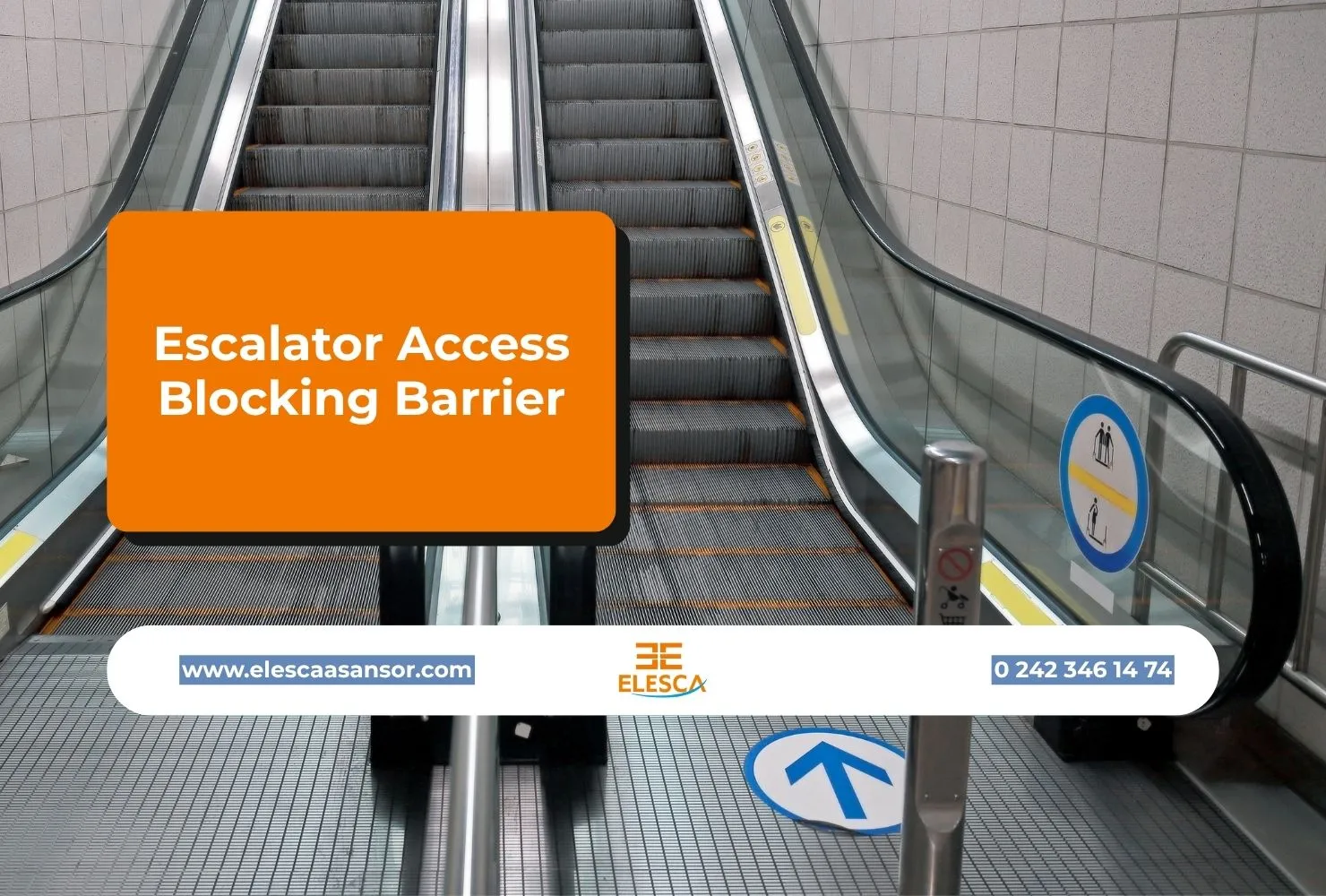
Escalator Access Blocking Barrier
What Is an Escalator Access Blocking Barrier?
An Escalator access blocking barrier is a safety component or protective system designed to restrict entry to an escalator when the equipment is not ready for public use, under maintenance, temporarily closed, or positioned in an area where controlled access is required. In commercial buildings, transportation hubs, shopping centers, hotels, hospitals, and public facilities, escalators operate in high-traffic environments. For this reason, access control around escalators is just as important as the mechanical performance of the escalator itself. A properly selected Escalator access blocking barrier helps prevent unauthorized use, accidental entry, and unsafe movement near escalator landings. It can be used during inspection, repair, cleaning, modernization, part replacement, or emergency shutdown situations. While escalator parts such as the escalator handrail, step roller, step chain, comb plate, pulley, and control panel ensure the movement and operation of the system, access blocking barriers support site safety by clearly separating users from restricted zones. Elesca Elevator & Escalator Systems supplies high-quality elevator, moving walk, and escalator spare parts from Antalya to domestic and international markets. With expert solution partners and reliable industry connections, Elesca supports customers who need durable components for safe and efficient escalator operation.
Why Is an Escalator Access Blocking Barrier Important?
An Escalator access blocking barrier is important because escalators are moving mechanical systems with many active parts. Even when an escalator is stopped, users may still attempt to walk on it. This can create risks, especially if maintenance work is ongoing, steps are removed, the handrail is disconnected, the comb plate is being replaced, or the control panel is under service. The main purpose of an Escalator access blocking barrier is to provide a visible and physical warning. It helps building managers, maintenance teams, and facility operators prevent unsafe access before an accident occurs. A simple sign may not always be enough in busy areas. A physical barrier makes the restriction clearer and more effective. In facilities with heavy pedestrian flow, safety communication must be immediate. People may be distracted, carrying luggage, using mobile phones, or moving quickly through the area. A well-positioned Escalator access blocking barrier reduces confusion and directs users toward alternative routes such as elevators, stairs, or another operating escalator.
Where Is an Escalator Access Blocking Barrier Used?
An Escalator access blocking barrier can be used in many different locations where escalator access needs to be controlled. These locations include:
Shopping Centers
Shopping malls often have several escalators connecting different floors. When one escalator is under maintenance, an Escalator access blocking barrier prevents customers from entering the closed unit. This helps protect both shoppers and maintenance technicians.
Airports and Metro Stations
Transportation buildings have intense passenger traffic. Escalator closures must be managed quickly and clearly. A strong Escalator access blocking barrier can guide passengers toward safe alternative routes and reduce crowding around inactive equipment.
Hotels and Business Centers
In premium buildings, safety equipment should also look professional. An Escalator access blocking barrier can be selected according to the building’s design, while still delivering strong safety performance.
Hospitals and Public Facilities
In hospitals, government buildings, and public service areas, escalators are used by people of different ages and mobility levels. Clear access restriction is essential when the escalator is unavailable. A visible Escalator access blocking barrier helps prevent confusion and supports safe circulation.
Industrial and Commercial Buildings
Some industrial buildings and commercial complexes use escalators or moving walks in controlled areas. An Escalator access blocking barrier helps prevent unauthorized access during service, cleaning, or technical inspection.
Main Functions of an Escalator Access Blocking Barrier
A reliable Escalator access blocking barrier performs several important functions. It is not only a temporary obstacle; it is part of a broader safety management approach.
Preventing Unauthorized Entry
When an escalator is out of service, people may still try to use it as a fixed staircase. This can be dangerous if the escalator has open panels, removed steps, damaged skirting, exposed comb plates, or disconnected handrails. An Escalator access blocking barrier discourages entry and protects users from hazards.
Protecting Maintenance Teams
Escalator technicians need a safe work area. During replacement of parts such as step rollers, step chains, pulleys, handrail inlet covers, or escalator control panels, unauthorized entry can interrupt work and create risk. An Escalator access blocking barrier helps define the maintenance zone.
Improving Public Safety Communication
A physical barrier communicates closure faster than text alone. In international facilities, language differences may reduce the effectiveness of written signs. The presence of an Escalator access blocking barrier makes the message visually clear.
Supporting Traffic Direction
In busy buildings, users need to know where to go when one escalator is closed. A well-placed Escalator access blocking barrier can redirect traffic toward another escalator, elevator, or stairway.
Reducing Liability Risks
Facility operators have a responsibility to maintain safe access conditions. Using an Escalator access blocking barrier during closures or service periods shows that preventive safety measures are being applied.
Types of Escalator Access Blocking Barrier Solutions
Different buildings require different barrier solutions. The best Escalator access blocking barrier depends on the escalator layout, traffic volume, closure duration, and safety requirements.
Portable Escalator Barriers
Portable barriers are practical for temporary closures. They can be moved easily and placed at the upper or lower landing of an escalator. This type of Escalator access blocking barrier is suitable for routine maintenance, cleaning, inspection, or short-term service work.
Foldable Safety Barriers
Foldable barriers are easy to store and fast to deploy. They are often preferred in shopping centers, hotels, and public buildings where space efficiency matters. A foldable Escalator access blocking barrier can be kept near maintenance rooms and used when needed.
Fixed Access Blocking Systems
Some facilities require more permanent access control. A fixed Escalator access blocking barrier can be installed in specific areas where escalator use is frequently restricted or where controlled entry is necessary.
Retractable Belt Barriers
Retractable belt systems are often used for crowd control. While they may not provide the same level of physical blocking as rigid barriers, they can be effective for guiding people away from closed escalators. For stronger safety needs, they may be combined with warning panels or rigid barrier frames.
Custom Barrier Solutions
Every escalator environment is different. A custom Escalator access blocking barrier can be designed according to landing width, floor layout, traffic direction, visual branding, and operational requirements.
Key Features of a Quality Escalator Access Blocking Barrier
Choosing the right Escalator access blocking barrier requires attention to material quality, visibility, durability, and ease of use. A barrier used in a low-traffic private building may not need the same strength as one used in a metro station or airport.
Strong and Durable Construction
A barrier must remain stable during daily use. It should resist impact, movement, and repeated handling. Durable construction is especially important in areas with heavy pedestrian flow.
High Visibility
An Escalator access blocking barrier should be easy to notice from a distance. Bright warning colors, reflective strips, clear symbols, and readable messages help users understand that the escalator is closed.
Easy Installation and Removal
Maintenance teams need equipment that can be used quickly. A practical Escalator access blocking barrier should be simple to position, remove, transport, and store.
Compatibility with Escalator Layout
The barrier must match the width and access points of the escalator. If it leaves large gaps, users may still pass through. Correct sizing is essential for effective blocking.
Professional Appearance
In modern buildings, safety equipment should not create a poor visual impression. A clean, professional Escalator access blocking barrier supports both safety and building image.
Resistance to Wear
Barriers used indoors and outdoors may face different conditions. Dust, cleaning chemicals, moisture, sunlight, and frequent handling can affect product life. Quality materials help extend durability.
When Should an Escalator Access Blocking Barrier Be Used?
An Escalator access blocking barrier should be used whenever public access to an escalator needs to be stopped or controlled. Common situations include maintenance, cleaning, inspection, modernization, emergency shutdown, electrical fault, mechanical fault, part replacement, and construction work near the escalator. For example, if the escalator step chain is being checked, access must be blocked. If the comb plate is damaged or removed, users should not approach the escalator. If the step skirting is being adjusted, the landing area must be secured. If the escalator control panel is under service, the system should not be accessed by unauthorized people. In all these cases, an Escalator access blocking barrier provides a practical layer of safety. It helps ensure that people do not enter the escalator while technical work is in progress.
Connection Between Escalator Spare Parts and Access Safety
Escalator safety depends on both mechanical reliability and proper access control. Components such as escalator handrails, pulleys, step rollers, step chains, comb plates, steps, C return chains, handrail inlet covers, control panels, and step skirting all contribute to the safe operation of the system. When one of these parts requires inspection or replacement, the escalator should be taken out of service and protected with an Escalator access blocking barrier. This creates a safer environment for both users and technicians. Elesca Elevator & Escalator Systems offers a wide range of escalator spare parts for different operational needs. By supplying quality components to domestic and international markets, Elesca supports safe, efficient, and long-lasting escalator systems.
How to Choose the Right Escalator Access Blocking Barrier
Selecting the correct Escalator access blocking barrier begins with understanding the site conditions. Not every barrier is suitable for every building. A low-cost temporary barrier may not be enough for a high-traffic transportation center, while a heavy fixed barrier may be unnecessary for a small commercial building.
Check the Escalator Width
The barrier should cover the entrance clearly. Measure the escalator landing area and consider whether the barrier must block one side or both upper and lower landings.
Evaluate Traffic Density
Buildings with high traffic require stronger and more visible barriers. A busy airport or metro station needs an Escalator access blocking barrier that can withstand frequent contact and remain stable.
Consider Closure Duration
For short maintenance tasks, portable or foldable barriers may be enough. For long-term closures, a more rigid and secure Escalator access blocking barrier may be necessary.
Look at Storage Requirements
If the facility has limited storage space, foldable or compact barrier models may be more practical.
Choose Clear Warning Messages
The barrier should communicate that the escalator is closed, under maintenance, or not available for use. Symbols can help support understanding in multilingual environments.
Think About Brand and Building Image
For hotels, malls, and business centers, the appearance of the Escalator access blocking barrier should match the professional standards of the facility.
Benefits of Using an Escalator Access Blocking Barrier
A well-designed Escalator access blocking barrier offers many benefits for facility owners, maintenance companies, and users.
Better User Protection
The main benefit is safety. Barriers reduce the chance of people entering restricted escalator areas.
Improved Maintenance Efficiency
Technicians can work with fewer interruptions when the area is clearly blocked.
Clearer Communication
Users can immediately see that the escalator is closed, even from a distance.
More Organized Building Flow
An Escalator access blocking barrier helps direct users to alternative routes and prevents crowd buildup at closed access points.
Reduced Risk of Accidents
By limiting access to unsafe areas, barriers help reduce accident potential.
Professional Safety Management
Using the right barrier shows that the building operator takes safety seriously.
Escalator Maintenance Situations That Require Access Blocking
During escalator maintenance, many parts may need to be inspected, repaired, or replaced. In these moments, using an Escalator access blocking barrier is a practical safety step.
Handrail Replacement
The escalator handrail is one of the most visible and frequently used parts. If it is being replaced or adjusted, the escalator should not be used.
Step Roller Inspection
Step rollers support smooth step movement. During inspection or replacement, access must be restricted.
Step Chain Service
The step chain is a critical moving component. Work on this part requires controlled access and technical safety measures.
Comb Plate Replacement
The comb plate is located at the escalator landing and interacts closely with the steps. If it is damaged or removed, users must be kept away.
Control Panel Service
The escalator control panel manages system operation. Electrical or control-related service requires the escalator to be secured.
Step Skirting Adjustment
Step skirting supports safe clearance along the sides of the escalator. Adjustment work should be done with access blocked.
Why Work with Elesca Elevator & Escalator Systems?
Elesca Elevator & Escalator Systems is based in Antalya and supplies elevator, moving walk, and escalator spare parts to domestic and international markets. The company works with leading industry brands and expert solution partners to provide high-quality products and services. Customers choose Elesca for reliable product supply, professional industry knowledge, international market experience, and a broad range of escalator spare parts. Whether the need is an escalator handrail, pulley, step roller, step chain, comb plate, escalator control panel, step, C return chain, handrail inlet cover, step skirting, or a safety-related solution such as an Escalator access blocking barrier, Elesca focuses on quality and customer satisfaction. For product information and supply support, customers can contact Elesca Elevator & Escalator Systems at +90 242 346 14 74.
Frequently Asked Questions About Escalator Access Blocking Barrier
What is an Escalator access blocking barrier used for?
An Escalator access blocking barrier is used to prevent people from entering an escalator that is closed, under maintenance, damaged, being cleaned, or temporarily out of service.
Is an Escalator access blocking barrier necessary during maintenance?
Yes. During maintenance, escalator parts may be exposed, removed, or disconnected. An Escalator access blocking barrier helps protect users and allows technicians to work in a safer area.
Can a barrier be used for both escalators and moving walks?
In many cases, yes. Depending on size and design, an Escalator access blocking barrier can also be used to restrict access to moving walks during service or closure.
What makes a good Escalator access blocking barrier?
A good barrier should be durable, visible, stable, easy to use, properly sized, and suitable for the traffic conditions of the building.
Where should the barrier be placed?
The barrier should be placed at the access points of the escalator, usually at the upper and lower landings. For complete safety, both ends may need to be blocked.
Can Elesca supply escalator spare parts internationally?
Yes. Elesca Elevator & Escalator Systems supplies high-quality elevator, moving walk, and escalator spare parts to both domestic and international markets.
An Escalator access blocking barrier is an essential safety solution for any building that uses escalators or moving walks. It helps prevent unauthorized entry, protects users, supports maintenance teams, improves traffic direction, and strengthens overall safety management. Escalators rely on many important parts, including the escalator handrail, pulley, step roller, step chain, comb plate, escalator control panel, step, C return chain, handrail inlet cover, and step skirting. When these components require maintenance or replacement, access control becomes a key part of safe operation. Elesca Elevator & Escalator Systems, based in Antalya, provides reliable elevator, moving walk, and escalator spare parts for domestic and international customers. With quality products, expert solution partners, and industry-focused service, Elesca supports safe and efficient vertical transportation systems. For more information about escalator spare parts and safety-related solutions, contact Elesca Elevator & Escalator Systems at +90 242 346 14 74.


