
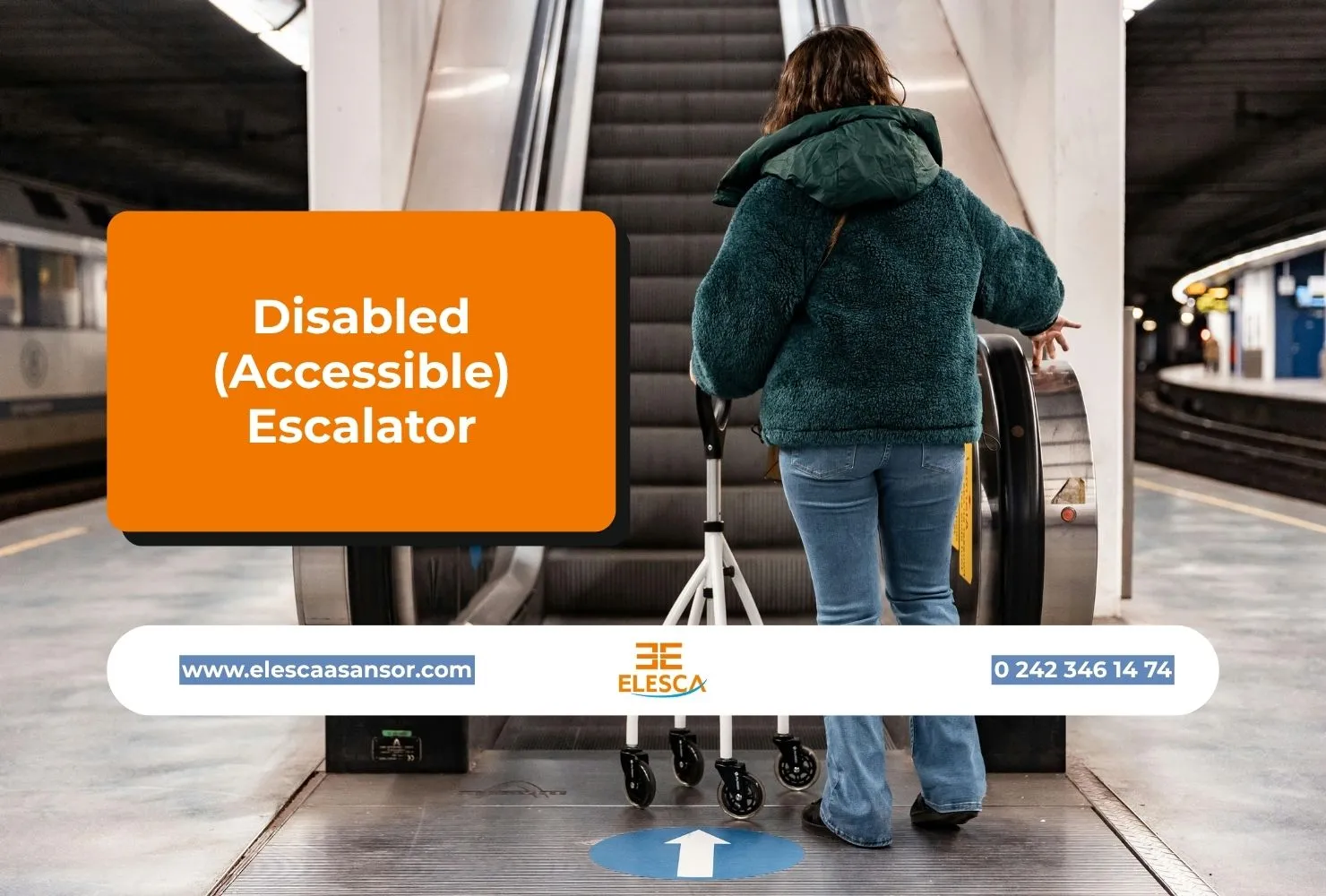
Disabled Escalator
Disabled Escalator Safety, Accessibility, Maintenance
A Disabled escalator can mean two different things in building operations. In one context, it refers to an escalator that is out of service, turned off, blocked, or temporarily unavailable due to a technical fault. In another context, people may use the phrase when searching for accessibility solutions for disabled passengers, wheelchair users, elderly users, or people with limited mobility.
Both meanings are important. A Disabled escalator affects passenger flow, safety, accessibility, customer experience, and maintenance planning. For shopping malls, airports, metro stations, hotels, hospitals, business centers, and public buildings, even a short period of escalator downtime can create congestion and inconvenience. For people with mobility limitations, a non-operational escalator can also create a serious accessibility problem if there is no nearby elevator, moving walk, platform lift, or alternative route.
Elesca Elevator & Escalator Systems, based in Antalya, supplies high-quality Elevator, Moving Walk, and Escalator spare parts to domestic and international markets. With products such as Escalator Handrail, Pulley, Step Roller, Step Chain, Comb Plate, Escalator Control Panel, Step, C Return Chain, Handrail Inlet Cover, and Step Skirting, Elesca supports maintenance companies, facility managers, and service teams with reliable spare part solutions.
What Is a Disabled Escalator?
A Disabled escalator is an escalator that cannot safely operate, has been intentionally switched off, or is unavailable for passenger use. This may happen because of a mechanical failure, electrical issue, safety sensor activation, modernization work, scheduled maintenance, or emergency shutdown.
In facility management, a Disabled escalator should never be treated as a minor inconvenience. Escalators are moving transportation systems with many synchronized parts. When one component fails, the safest decision is often to stop the unit until a qualified service team inspects the system.
A Disabled escalator may show visible signs such as stopped steps, warning barriers, out-of-service signs, abnormal noise, damaged comb plates, loose handrails, irregular step movement, or control panel error codes. In some cases, the escalator may look normal but remain disabled because the safety circuit has detected a fault.
Quick Answer: Why Does an Escalator Become Disabled?
A Disabled escalator usually occurs because of safety activation, worn spare parts, electrical faults, control panel errors, chain problems, step damage, handrail issues, comb plate obstruction, or planned maintenance. The escalator should remain out of service until trained technicians identify the cause and replace or repair the affected parts.
Common Causes of a Disabled Escalator
Understanding the cause of a Disabled escalator helps maintenance teams respond faster and reduce downtime. While every system requires professional inspection, the following issues are among the most common reasons.
- Step Chain Problems
The step chain is one of the most critical components in an escalator system. It carries and guides the movement of the steps. If the step chain becomes worn, stretched, misaligned, or damaged, the escalator may stop automatically to prevent further risk.
A Disabled escalator caused by step chain problems can create serious safety concerns. Irregular step spacing, vibration, noise, and jerky movement may indicate chain wear. Replacing the Step Chain with a compatible, high-quality part helps restore safe operation and prevent repeated breakdowns.
- Step Roller Wear
Step rollers support smooth step movement inside the escalator structure. Over time, rollers can wear due to load, friction, dirt, lack of lubrication, or heavy traffic. A damaged Step Roller may cause noise, vibration, uneven step travel, or increased mechanical resistance.
When step rollers fail, the system may detect abnormal movement and stop. This creates a Disabled escalator that requires inspection and replacement of worn rollers. In high-traffic locations, preventive replacement of step rollers can significantly reduce unexpected downtime.
- Escalator Handrail Faults
The Escalator Handrail must move at a speed synchronized with the steps. If the handrail slips, slows down, cracks, stretches, or comes out of alignment, the escalator may become unsafe for users. Handrail-related problems are especially noticeable because passengers depend on the handrail for balance.
A Disabled escalator with handrail problems may require handrail adjustment, pulley inspection, handrail inlet cover replacement, or a new handrail. Ignoring handrail issues can increase accident risk and reduce passenger confidence.
- Comb Plate Damage or Obstruction
The Comb Plate is located at the landing area where steps enter and exit the escalator. It helps guide passengers safely on and off the unit. Small objects, debris, loose shoes, damaged teeth, or misalignment can trigger safety devices.
A Disabled escalator caused by comb plate obstruction should be handled carefully. The area must be secured, and the comb plate should be inspected for broken teeth, deformation, or incorrect positioning. Replacing damaged comb plates helps prevent entrapment risks and improves passenger safety.
- Escalator Control Panel Errors
The Escalator Control Panel acts as the command center of the system. It monitors sensors, safety circuits, motor functions, speed, direction, and fault signals. If the control panel detects an error, it may disable the escalator immediately.
A Disabled escalator caused by control panel faults may display an error code or remain locked until reset by an authorized technician. However, simply resetting the system without diagnosing the reason can be dangerous. Electrical faults, sensor failures, or communication errors should be properly checked before operation resumes.
- Pulley and Drive System Issues
Pulleys help transfer motion and support the handrail or mechanical drive system depending on the escalator design. Worn pulleys can cause slipping, noise, vibration, and reduced efficiency. If the system detects abnormal motion, the escalator may shut down.
For a Disabled escalator, checking the Pulley and related drive parts is essential. Replacing worn pulleys with compatible components can improve performance and extend the service life of the escalator.
- Step Damage
Escalator steps must remain structurally strong, aligned, and free from cracks or deformation. A damaged Step can cause uneven movement, passenger tripping risk, and safety switch activation. In some cases, impact, corrosion, heavy load, or poor maintenance can damage the step.
A Disabled escalator with damaged steps should not be restarted until the affected parts are replaced. Step compatibility is critical because dimensions, materials, grooves, and connection points must match the system.
- Handrail Inlet Cover Problems
The Handrail Inlet Cover is positioned where the handrail enters the escalator body. It protects users from contact with moving internal parts. If the cover is missing, cracked, loose, or misaligned, the escalator may be considered unsafe.
A Disabled escalator caused by handrail inlet cover damage should be repaired quickly. This component is small compared to the full system, but it plays an important safety role.
- Step Skirting Misalignment
Step Skirting is located along the sides of the steps. Proper clearance between the steps and skirting is necessary to reduce friction and avoid entrapment risks. If the skirting is damaged, bent, or incorrectly adjusted, it may cause rubbing, noise, or safety activation.
A Disabled escalator with step skirting problems may require adjustment or replacement. Regular inspection helps prevent side clearance problems and improves passenger safety.
- C Return Chain Wear
The C Return Chain supports the return movement in certain escalator systems. Wear, stretching, or misalignment can affect smooth operation. If the chain does not move correctly, the system may stop.
A Disabled escalator caused by C Return Chain issues requires careful mechanical inspection. Using reliable replacement parts helps restore stable movement and reduce recurring failures.
Disabled Escalator and Accessibility: What Building Managers Should Know
When people search for Disabled escalator, they may also be looking for accessibility information. Escalators are not suitable for wheelchair users unless a specific approved accessibility system is designed for that purpose, and in most public buildings, elevators or platform lifts are the safer accessibility solution.
For disabled passengers, elderly users, parents with strollers, people carrying heavy luggage, or people recovering from injury, a Disabled escalator can create serious movement barriers. Facility managers should always provide clear alternative routes.
Accessible building planning should include:
Clear signage to elevators or ramps
Working elevator access near escalator zones
Emergency assistance procedures
Regular inspection of escalators and moving walks
Safe temporary barriers around out-of-service units
Fast spare part supply for critical components
Communication with security and facility teams
If a Disabled escalator blocks a major route, the building should guide passengers to a safe alternative instead of allowing people to walk on stopped escalator steps.
Can People Walk on a Disabled Escalator?
People often assume that a stopped escalator can be used like a normal staircase. However, walking on a Disabled escalator is not always safe. Escalator steps have different dimensions from standard stairs, and the landing areas can create tripping hazards. If the escalator stopped due to a mechanical fault, movement could also restart unexpectedly if not properly locked out.
For safety, building managers should block access to a Disabled escalator unless it has been assessed and approved for temporary stair use by qualified personnel. Warning signs, barriers, and clear alternative access should be provided.
What Should You Do When an Escalator Is Disabled?
When a Disabled escalator is discovered, the first priority is passenger safety. The unit should be isolated, clearly marked, and inspected by trained technicians.
Recommended steps:
Stop passenger access immediately.
Place visible barriers and warning signs.
Check whether anyone is injured or trapped.
Notify the maintenance provider or technical team.
Record visible symptoms such as noise, error codes, or damaged parts.
Do not restart the escalator without professional inspection.
Replace faulty components with compatible spare parts.
Test the system before returning it to service.
A Disabled escalator should not be restarted only because it appears normal. Escalator safety systems are designed to stop operation before a bigger problem occurs.
Spare Parts That Help Restore a Disabled Escalator
Reliable spare parts are essential for reducing escalator downtime. Elesca Elevator & Escalator Systems supplies a wide range of escalator components for maintenance, repair, and modernization projects.
Escalator Handrail
A worn or damaged handrail can cause passenger safety issues and system faults. Replacing the Escalator Handrail helps restore grip, movement synchronization, and user confidence.
Pulley
Pulley problems may create slipping, noise, or irregular movement. A compatible Pulley supports smooth operation and reduces stress on connected components.
Step Roller
A damaged Step Roller can lead to vibration, noise, and poor step movement. High-quality rollers help prevent repeated failures and improve ride comfort.
Step Chain
The Step Chain is central to safe step movement. Worn or stretched chains can cause major operational problems and may lead to a Disabled escalator.
Comb Plate
The Comb Plate improves safe entry and exit at landing areas. Broken or misaligned comb plates should be replaced promptly.
Escalator Control Panel
The Escalator Control Panel monitors system safety and operation. Faulty control systems can disable the escalator or prevent safe restart.
Step
Damaged Steps can create tripping hazards and mechanical problems. Correct replacement steps must match the escalator model and technical requirements.
C Return Chain
The C Return Chain supports reliable return movement in applicable systems. Replacement may be required when wear or misalignment affects performance.
Handrail Inlet Cover
The Handrail Inlet Cover protects users from handrail entry points. Damage to this part should be repaired quickly for safety compliance.
Step Skirting
Step Skirting helps maintain side safety and step clearance. Proper skirting condition reduces friction and entrapment risk.
How to Prevent Disabled Escalator Problems
Preventive maintenance is the best way to reduce Disabled escalator downtime. Escalators in high-traffic areas should be inspected regularly because small issues can quickly become major failures.
Important preventive actions include checking handrail speed, inspecting step rollers, testing safety switches, cleaning comb plates, checking step chain tension, examining control panel error records, inspecting step skirting clearance, and replacing worn parts before failure.
A strong spare parts plan also matters. If a facility waits until a breakdown occurs before sourcing parts, downtime becomes longer. Keeping critical components available or working with a reliable supplier helps reduce service interruption.
How Long Does It Take to Repair a Disabled Escalator?
The repair time for a Disabled escalator depends on the cause of the problem, spare part availability, technician access, system model, and severity of the fault. Simple issues such as minor obstruction or sensor reset may be resolved quickly, while chain replacement, control panel repair, step replacement, or modernization work may require more time.
The fastest repair process usually happens when the maintenance team can identify the fault quickly and source compatible spare parts without delay. This is why working with an experienced spare parts supplier is important for facility managers and service companies.
Disabled Escalator Maintenance Checklist
A Disabled escalator can often be avoided through regular inspection. The following checklist can help maintenance teams and facility managers identify risk areas:
Check handrail condition and movement.
Inspect step rollers for wear and noise.
Examine step chain tension and lubrication.
Look for cracked, broken, or misaligned steps.
Inspect comb plate teeth and landing areas.
Check pulley wear and alignment.
Review control panel fault history.
Test emergency stop buttons and safety switches.
Inspect handrail inlet covers.
Check step skirting clearance.
Confirm that signage and barriers are available.
Keep essential spare parts ready for urgent repairs.
This checklist does not replace professional maintenance, but it helps teams understand the areas that most often cause a Disabled escalator.
Disabled Escalator vs. Elevator Accessibility
A Disabled escalator is not the same as an accessible transportation solution. Escalators are designed for standing passengers, while elevators are usually the primary vertical transportation solution for wheelchair users and people with limited mobility.
When an escalator is disabled, building managers should make sure the elevator is operational and easy to find. If both the escalator and elevator are unavailable, the building may create major accessibility problems for users.
In modern facility planning, escalator maintenance and elevator accessibility should be managed together. A building with high passenger traffic needs both safe escalator operation and reliable accessible routes.
Why Spare Part Quality Matters
Using low-quality or incompatible parts can cause repeat breakdowns, noise, safety risks, and long-term system damage. A Disabled escalator repaired with the wrong component may return to service temporarily but fail again soon.
High-quality spare parts should match the technical specifications of the escalator system. Important factors include dimensions, material quality, load capacity, brand compatibility, durability, and installation requirements.
Elesca Elevator & Escalator Systems works with leading industry brands and expert solution partners to deliver reliable spare parts and service support for domestic and international customers. For companies managing escalator maintenance, this helps reduce operational risk and improve long-term system performance.
When Should a Disabled Escalator Be Modernized?
Sometimes a Disabled escalator is not only the result of one broken part. It may indicate that the system is aging and requires modernization. If breakdowns happen frequently, spare parts are difficult to find, energy consumption is high, or safety components are outdated, modernization may be the better long-term solution.
Modernization may include replacing the control panel, upgrading safety systems, renewing steps, changing handrails, replacing chains, improving drive components, and updating landing parts. The goal is to improve reliability, safety, and passenger comfort without replacing the entire escalator when a targeted upgrade is possible.
Frequently Asked Questions About Disabled Escalator
What does Disabled escalator mean?
Disabled escalator means an escalator that is out of service, stopped, switched off, or unavailable for safe passenger use. It may also refer to searches about escalator accessibility for disabled passengers.
Is it safe to walk on a disabled escalator?
Walking on a Disabled escalator is not always safe. The unit should be blocked unless qualified personnel confirm it can be used temporarily as stairs.
Why would an escalator suddenly stop?
An escalator may stop because of safety switch activation, comb plate obstruction, step chain problems, control panel errors, step roller wear, handrail faults, or emergency stop use.
Which parts commonly cause escalator downtime?
Common parts linked to a Disabled escalator include Step Chain, Step Roller, Comb Plate, Escalator Control Panel, Escalator Handrail, Pulley, Step, C Return Chain, Handrail Inlet Cover, and Step Skirting.
Can wheelchair users use an escalator?
Standard escalators are not suitable for wheelchair users. Buildings should provide elevators, ramps, platform lifts, or other approved accessible routes.
How can facility managers reduce escalator downtime?
Facility managers can reduce Disabled escalator downtime by scheduling preventive maintenance, inspecting critical components, keeping spare parts available, and working with reliable suppliers.
Who supplies escalator spare parts internationally?
Elesca Elevator & Escalator Systems supplies Elevator, Moving Walk, and Escalator spare parts to domestic and international markets from Antalya, Türkiye.
Why Choose Elesca Elevator & Escalator Systems?
Elesca Elevator & Escalator Systems provides spare part solutions for elevator, moving walk, and escalator systems. Based in Antalya, the company serves both domestic and international markets with high-quality products and expert solution partners.
For a Disabled escalator, fast access to the right spare parts can make the difference between short downtime and long service interruption. Elesca supports maintenance professionals and facility managers with products such as Escalator Handrail, Pulley, Step Roller, Step Chain, Comb Plate, Escalator Control Panel, Step, C Return Chain, Handrail Inlet Cover, and Step Skirting.
Whether the issue is mechanical wear, control system failure, landing component damage, or modernization planning, choosing the right supplier helps improve safety, reliability, and long-term performance.
For product information and spare part requests, contact Elesca Elevator & Escalator Systems at +90 242 346 14 74.
A Disabled escalator should always be handled with safety, accessibility, and technical accuracy in mind. Whether the escalator is stopped because of a fault, maintenance, modernization, or safety activation, it should not be ignored or restarted without proper inspection.
The most common causes include step chain wear, step roller damage, comb plate obstruction, handrail problems, control panel errors, pulley wear, step damage, C Return Chain issues, handrail inlet cover problems, and step skirting misalignment. Preventive maintenance and high-quality spare parts are the best ways to reduce downtime.
For facilities that depend on reliable passenger movement, working with a trusted spare parts supplier is essential. Elesca Elevator & Escalator Systems offers quality spare part solutions for escalator, elevator, and moving walk systems, helping customers maintain safer, smoother, and more dependable operations.


