
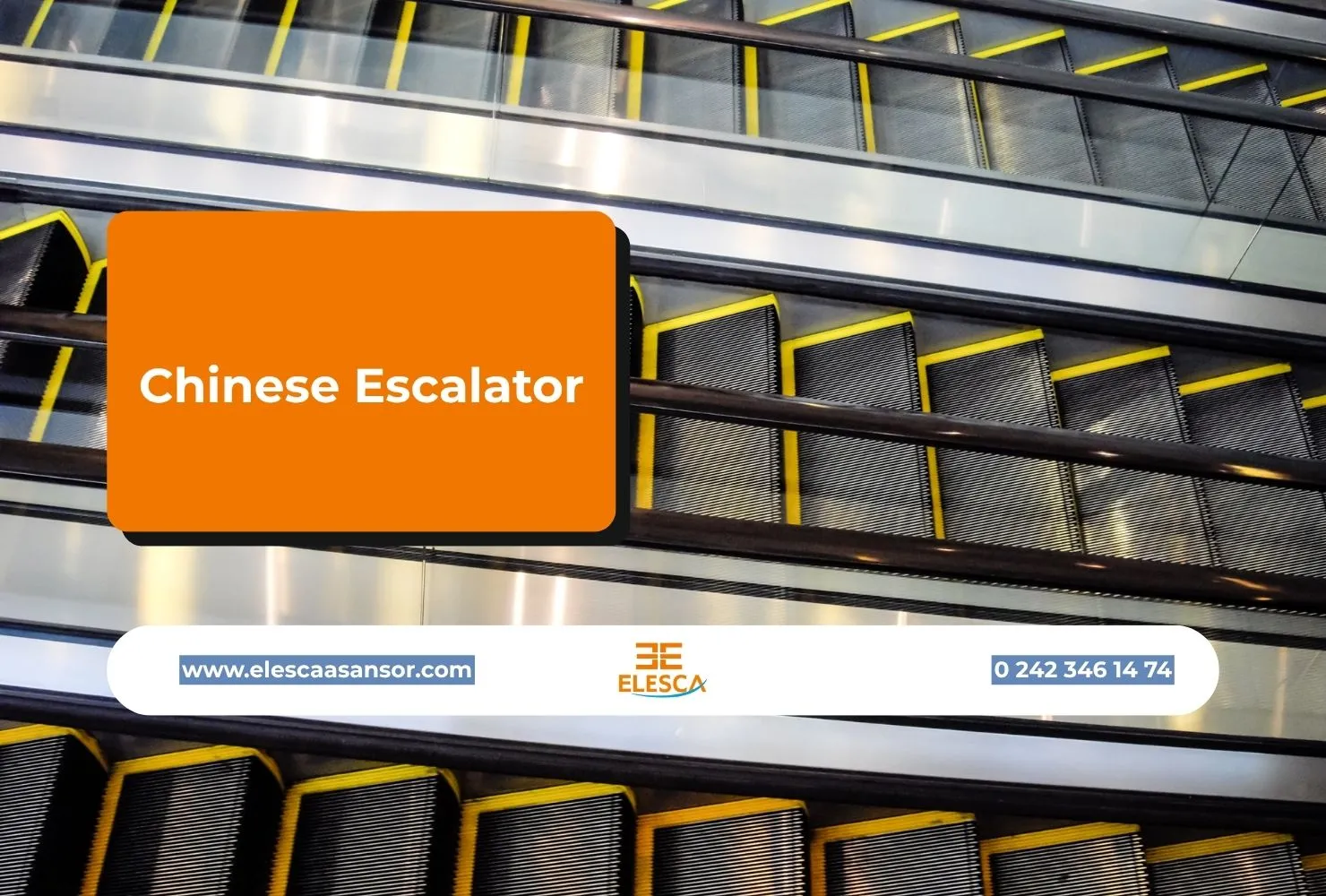
Chinese Escalator
Chinese Escalator Spare Parts, Quality Standards, Maintenance and Supply Guide
A Chinese escalator is widely used in shopping malls, metro stations, airports, hotels, hospitals, public buildings and commercial projects around the world. China has become one of the most active manufacturing centers for escalator systems and escalator spare parts, offering a wide range of solutions for new installations, modernization projects and replacement component needs. For building owners, maintenance companies and technical purchasing teams, choosing the right Chinese escalator parts is not only a matter of price. Compatibility, safety, material quality, durability, supplier experience and after-sales support are all important factors. A low-cost part may seem attractive at first, but if it does not match the system correctly, it can cause noise, vibration, premature wear, operational failure or safety risks. Elesca Elevator & Escalator Systems, based in Antalya, supplies elevator, moving walk and escalator spare parts to both domestic and international markets. With high-quality products, expert solution partners and experience with leading industry brands, Elesca supports customers in selecting reliable components for Chinese escalator systems and many other escalator models.
What Is a Chinese Escalator?
A Chinese escalator generally refers to an escalator system manufactured in China or designed with Chinese-origin components. These systems may be used under Chinese brands, international private-label brands or project-based OEM solutions. In many markets, Chinese escalator systems are preferred because they can offer competitive pricing, broad product availability and flexible spare part options. However, not every Chinese escalator is the same. Quality can vary depending on the manufacturer, production standard, component supplier, installation quality and maintenance history. Some systems are designed for high-traffic public areas, while others are more suitable for medium-traffic commercial buildings. This is why technical evaluation is essential before purchasing or replacing any part. A well-maintained Chinese escalator can operate efficiently for many years when it is supported with compatible handrails, step rollers, step chains, comb plates, pulleys, control panels and other critical parts.
Why Are Chinese Escalator Systems Commonly Used?
The popularity of the Chinese escalator is linked to several practical advantages. Many projects require cost-effective vertical transportation systems without compromising essential safety and operating performance. Chinese manufacturers often provide a wide product range for commercial, public and industrial applications. Another reason is spare part availability. Since many Chinese escalator systems share similar technical structures, replacement parts can often be sourced more easily than some older or discontinued systems. This can help maintenance companies reduce downtime and keep escalators in service. Common reasons for choosing a Chinese escalator include:
Competitive Initial Investment
A Chinese escalator may provide a lower initial purchase cost compared to some premium-brand alternatives. This makes it attractive for shopping centers, business complexes, hotels and public building projects with budget-sensitive planning.
Wide Spare Part Options
Many Chinese escalator spare parts are available in different technical specifications. Components such as escalator handrails, step rollers, step chains, comb plates, pulleys and step skirting can often be supplied according to model and measurement requirements.
Flexible Project Solutions
A Chinese escalator can be used in different environments, including indoor, semi-outdoor and heavy-duty areas. With the correct specifications, it can be adapted to various traffic capacities and architectural needs.
Global Market Presence
Chinese manufacturing has become active in many international markets. As a result, Chinese escalator systems and spare parts are commonly encountered in Europe, the Middle East, Asia, Africa and many developing construction markets.
Key Parts Used in a Chinese Escalator
A Chinese escalator is made up of many mechanical, electrical and safety-related components. Each part has a specific function, and failure in one component may affect the entire system. For safe and smooth operation, all parts must work together with correct alignment and proper maintenance. Elesca Elevator & Escalator Systems supplies essential components for Chinese escalator systems, including escalator handrails, pulleys, step rollers, step chains, comb plates, escalator control panels, steps, C return chains, handrail inlet covers and step skirting.
Escalator Handrail
The handrail is one of the most visible parts of a Chinese escalator. It moves at the same speed as the steps and helps passengers maintain balance while riding. A high-quality escalator handrail must be flexible, durable, smooth and resistant to cracking. If the handrail becomes loose, worn, slow or misaligned, passengers may feel unsafe. Handrail problems can also create friction, noise and system strain. For this reason, choosing the correct handrail size and profile is very important for every Chinese escalator maintenance project.
Pulley
The pulley supports movement transmission within the escalator system. In a Chinese escalator, pulleys must be dimensionally accurate and made from durable materials. A worn or damaged pulley can cause vibration, irregular movement and excessive wear on connected components. Replacing a pulley with an incompatible part may reduce system efficiency. Before installation, diameter, groove structure, shaft compatibility and load capacity should be checked carefully.
Step Roller
The step roller allows the escalator step to move smoothly along the track. In a Chinese escalator, step rollers are exposed to continuous load, friction and movement. Poor-quality rollers may create noise, shaking or uneven step motion. A reliable step roller should offer strong bearing performance, wear resistance and smooth rotation. Regular inspection helps detect cracking, flat spots, bearing damage and deformation before they cause bigger problems.
Step Chain
The step chain is one of the most critical mechanical components of a Chinese escalator. It connects and drives the steps in a synchronized movement. Since the step chain carries significant load, quality and compatibility are essential. A stretched, corroded or damaged step chain may cause irregular step spacing, vibration and safety risks. During replacement, chain pitch, roller diameter, pin strength and overall length must match the escalator model.
Comb Plate
The comb plate is located at the entrance and exit points of the escalator. In a Chinese escalator, the comb plate helps guide passenger movement between the floor plate and the moving steps. It also reduces the risk of objects being trapped between the steps and landing area. Damaged comb teeth should never be ignored. Broken or missing teeth may increase the risk of shoe, clothing or object entrapment. A correct comb plate improves both safety and appearance.
Escalator Control Panel
The escalator control panel manages the electrical operation of the system. In a Chinese escalator, the control panel may include safety circuits, motor control elements, sensors, relays, contactors and monitoring units. A properly functioning control panel supports safe startup, stopping, fault detection and emergency response. When replacing or modernizing a Chinese escalator control panel, technical compatibility and professional configuration are essential.
Escalator Step
The step is the passenger-carrying platform of the escalator. A Chinese escalator step is commonly manufactured from aluminum or steel materials depending on the design. Steps must have anti-slip surfaces, accurate dimensions and strong load-bearing capacity. Cracked, bent or worn steps should be replaced quickly. Step damage can affect passenger safety and may also create contact problems with comb plates or skirting.
C Return Chain
The C return chain supports return movement in specific escalator configurations. In a Chinese escalator, this component must be selected according to the technical structure of the system. Poor chain quality may lead to irregular movement, noise and shortened service life.
Handrail Inlet Cover
The handrail inlet cover is positioned where the handrail enters the escalator body. In a Chinese escalator, this part improves safety by helping prevent fingers, clothing or objects from entering the handrail opening. A damaged handrail inlet cover should be replaced with a compatible part. It is a small component, but it has an important safety function.
Step Skirting
Step skirting runs along the sides of the steps. In a Chinese escalator, skirting helps reduce the gap between moving steps and the escalator side panel. Proper skirting alignment reduces friction and supports passenger safety. Worn, bent or misaligned skirting may cause rubbing noise, step friction or increased entrapment risk. Regular maintenance is important for reliable operation.
How to Choose Spare Parts for a Chinese Escalator
Choosing spare parts for a Chinese escalator requires technical attention. The part should not be selected only by appearance. Even similar-looking parts may have different measurements, materials and operating tolerances. Before ordering a replacement component, maintenance teams should check the escalator brand, model, serial number, installation year, part dimensions and operating environment. If the original part is available, photos and measurements can help identify the correct replacement. The most important selection criteria include:
Model Compatibility
Every Chinese escalator has specific mechanical and electrical requirements. Step rollers, step chains, comb plates, handrails and control panels must match the system design. Using the wrong part can lead to poor performance or safety problems.
Material Quality
Material quality directly affects service life. A Chinese escalator operating in a busy mall or metro station needs stronger parts than a low-traffic building system. Components should be resistant to wear, friction, heat, moisture and mechanical stress.
Accurate Dimensions
Small dimensional differences can create major issues in escalator operation. Step width, chain pitch, roller diameter, comb plate tooth design and handrail profile must be checked carefully for every Chinese escalator part order.
Safety Compliance
Escalator parts must support safe passenger movement. Comb plates, handrail inlet covers, skirting, steps and control panels all have safety-related roles. For a Chinese escalator, replacement parts should be selected with safety performance in mind.
Supplier Experience
A professional supplier can help identify the correct part and reduce purchasing mistakes. Elesca Elevator & Escalator Systems works with expert solution partners to support customers in finding suitable spare parts for Chinese escalator systems and other escalator brands.
Chinese Escalator Maintenance: What Should Be Checked?
Regular maintenance is essential for every Chinese escalator. Even high-quality systems can develop problems if inspection, cleaning, lubrication and part replacement are neglected. Preventive maintenance helps reduce breakdowns, increase passenger safety and extend equipment life. A complete Chinese escalator maintenance routine should include mechanical inspection, electrical control checks, safety device testing and cleaning of visible and hidden components.
Handrail Movement
The handrail should move smoothly and at the correct speed. If the Chinese escalator handrail is slower than the steps, passengers may lose balance. Cracks, hardening, surface damage and tracking problems should be checked regularly.
Step and Comb Plate Alignment
Step alignment is critical for safe operation. In a Chinese escalator, steps must enter and exit the comb plate area smoothly. Any contact, abnormal gap or broken comb tooth requires immediate attention.
Roller and Chain Condition
Step rollers and step chains should be inspected for wear, noise, stretching and deformation. A Chinese escalator with worn rollers or stretched chains may operate roughly and create long-term damage to other parts.
Control Panel and Safety Devices
The control panel should be checked for fault codes, wiring condition, relay performance and safety circuit response. A Chinese escalator should stop correctly when emergency stop buttons, sensors or safety switches are activated.
Noise and Vibration
Unusual noise is often an early warning sign. Grinding, knocking, squeaking or vibration in a Chinese escalator may indicate roller wear, chain problems, pulley damage, step misalignment or insufficient lubrication.
Common Problems in Chinese Escalator Systems
A Chinese escalator can experience different issues depending on usage intensity, maintenance quality and part condition. Early diagnosis helps reduce repair cost and system downtime. Common problems include handrail slipping, noisy step movement, broken comb teeth, worn step rollers, chain elongation, control panel faults, step vibration and skirting friction.
Handrail Slipping
Handrail slipping can occur when the handrail becomes worn, stretched or improperly tensioned. In a Chinese escalator, this issue should be corrected quickly because the handrail is directly related to passenger balance.
Noisy Operation
A noisy Chinese escalator may have worn rollers, damaged pulleys, chain problems or loose components. Noise should not be ignored because it often indicates mechanical wear.
Step Vibration
Step vibration may be caused by damaged step rollers, poor track condition or chain irregularity. A Chinese escalator should provide stable and smooth passenger movement.
Comb Plate Damage
Comb plate teeth can break due to impact, trapped objects or misalignment. In a Chinese escalator, damaged comb plates should be replaced to maintain safe entry and exit points.
Control Faults
Control faults may result from electrical aging, sensor failure, wiring problems or incorrect configuration. A Chinese escalator control panel should always be serviced by qualified technicians.
Chinese Escalator Modernization
Modernization can improve the performance, safety and appearance of an older Chinese escalator. Instead of replacing the entire system, many building owners choose to upgrade selected components. This can reduce cost while improving reliability. Modernization may include replacing the escalator control panel, renewing step chains, installing new handrails, replacing step rollers, updating comb plates, improving lighting or refurbishing visible panels. A Chinese escalator modernization project should begin with a technical inspection. The inspection helps determine which parts are worn, which parts are still usable and which upgrades will provide the highest benefit.
Chinese Escalator Price: What Affects the Cost?
The price of a Chinese escalator or its spare parts depends on several factors. New escalator systems are priced according to height, angle, step width, usage type, traffic capacity, indoor or outdoor application, safety features and customization needs. For spare parts, cost depends on material quality, technical dimensions, brand compatibility, production origin and order quantity. A Chinese escalator handrail has different pricing criteria than a step chain or control panel. Main price factors include:
Escalator Type
Commercial, heavy-duty, indoor, outdoor and public transport escalators have different price levels. A Chinese escalator used in a metro station usually requires stronger components than one used in a small commercial building.
Part Specification
Step roller size, chain pitch, handrail profile, comb plate design and control panel configuration all affect price. For a Chinese escalator, accurate technical details are needed before giving a reliable quotation.
Quantity
Bulk orders may provide better unit pricing. Maintenance companies that service multiple Chinese escalator systems often benefit from planned spare part purchasing.
Quality Level
Higher-quality parts may cost more initially but can reduce long-term maintenance expenses. For critical components such as step chains, rollers and control panels, quality should not be sacrificed for a lower price.
Why Work with Elesca Elevator & Escalator Systems?
Elesca Elevator & Escalator Systems is based in Antalya and supplies elevator, moving walk and escalator spare parts for domestic and international markets. The company works with leading industry brands and expert solution partners to provide high-quality products and professional service. For Chinese escalator spare parts, Elesca supports customers with product selection, technical compatibility and reliable supply. Whether you need an escalator handrail, pulley, step roller, step chain, comb plate, escalator control panel, step, C return chain, handrail inlet cover or step skirting, Elesca can help you find the right solution. You can contact Elesca Elevator & Escalator Systems at +90 242 346 14 74 for product information, spare part requests and technical support.
Frequently Asked Questions About Chinese Escalator Systems
What is a Chinese escalator?
A Chinese escalator is an escalator system manufactured in China or produced with Chinese-origin components. It may be used in shopping malls, hotels, metro stations, airports and public buildings.
Are Chinese escalator spare parts easy to find?
Yes, many Chinese escalator spare parts are widely available. However, correct model identification and measurement are necessary to ensure compatibility.
Which parts are commonly replaced in a Chinese escalator?
Common replacement parts for a Chinese escalator include handrails, step rollers, step chains, comb plates, pulleys, steps, control panels, handrail inlet covers and step skirting.
How often should a Chinese escalator be maintained?
A Chinese escalator should be maintained regularly according to usage intensity, local safety requirements and manufacturer recommendations. High-traffic systems require more frequent inspections.
Can a Chinese escalator be modernized?
Yes. A Chinese escalator can be modernized by replacing worn mechanical parts, upgrading the control panel, renewing handrails and improving safety-related components.
How do I choose the correct Chinese escalator part?
To choose the correct Chinese escalator part, check the brand, model, serial number, measurements and original part details. Working with an experienced supplier reduces the risk of ordering the wrong component.
A Chinese escalator can be a practical and cost-effective solution for many commercial and public transportation projects. However, long-term performance depends on correct installation, regular maintenance and the use of compatible, high-quality spare parts. From escalator handrails and pulleys to step rollers, step chains, comb plates, control panels, steps, C return chains, handrail inlet covers and step skirting, every part has a direct impact on safety and operating quality. Choosing the right supplier is therefore essential. Elesca Elevator & Escalator Systems provides reliable spare part solutions for Chinese escalator systems and other elevator, moving walk and escalator applications. Based in Antalya and serving both domestic and international markets, Elesca supports customers with quality products, technical knowledge and professional supply service. For detailed information, contact Elesca Elevator & Escalator Systems at +90 242 346 14 74.


